
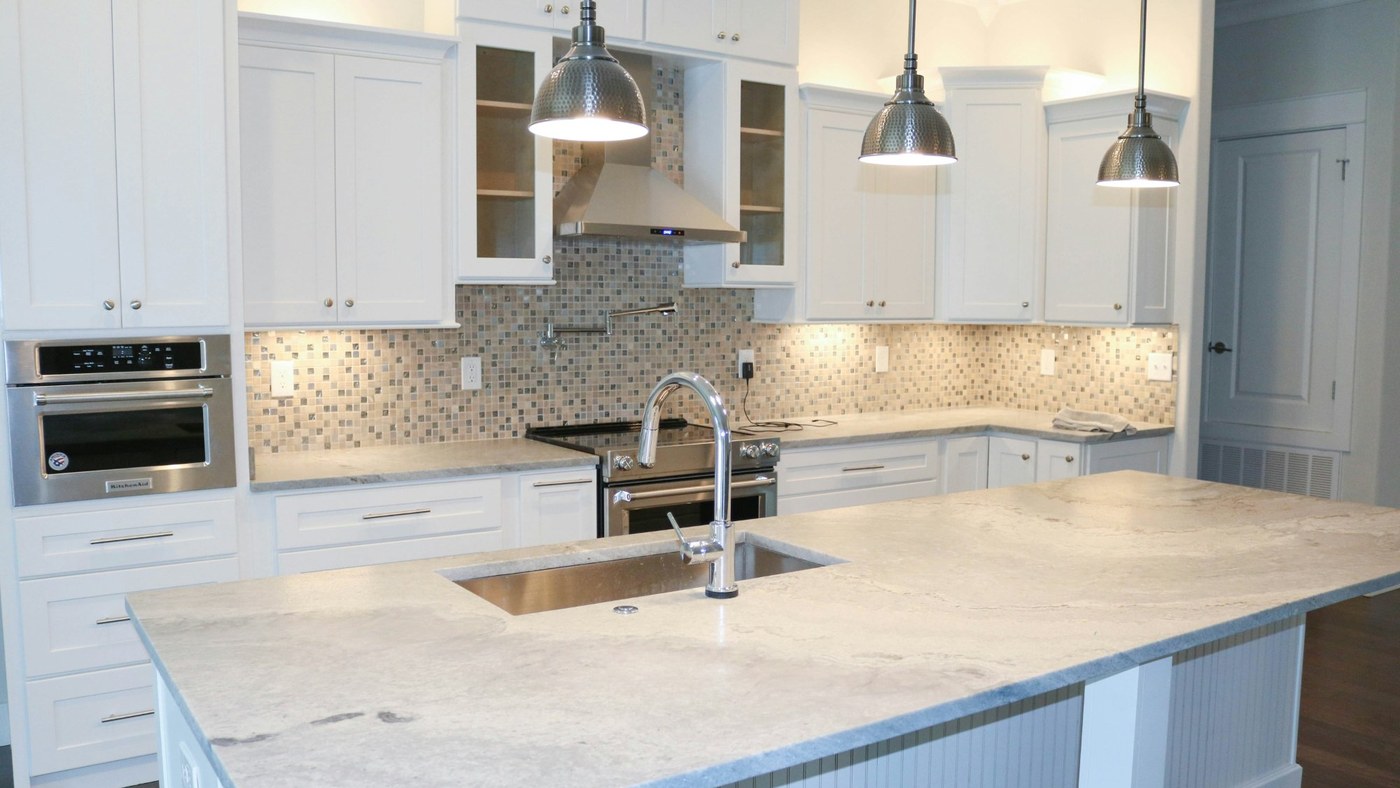
The best countertops for Colorado dry climate conditions are quartz and laminate, with sealed granite close behind: none of them react to the 10 to 20 percent indoor humidity we get in a Colorado Springs winter, and none need oiling. Butcher block is the one dry air punishes most, and standard quartz is the one I’d think twice about in a kitchen that takes hard afternoon sun at 6,035 feet. Installed costs run from $20–$45 per square foot for laminate up to $250 for marble, and quartz at $70–$150 is the all-around pick I recommend most. Water matters too: city water here is soft (about 1.3 to 2.8 grains per gallon), but homes on a private well (common in Black Forest, Falcon, and Monument) can have genuinely hard water, which makes marble a poor match and pushes butcher block toward extra upkeep.
Quick Comparison
Quartz and laminate are the lowest-maintenance picks in a dry, sunny, mixed-water place like Colorado Springs, and butcher block and marble are the highest. Here is how the six materials compare on cost, upkeep and water (the dry-air and sun details come in the next section).
| Material | Installed Cost | Durability | Maintenance | Hard Water |
|---|---|---|---|---|
| Laminate | $20–$45/sq ft | Moderate | Very low | ✓ Fine |
| Butcher Block | $50–$150/sq ft | Moderate | High | ⚠ Manage near sink |
| Concrete | $52–$93/sq ft | High | Moderate | ⚠ Seal regularly |
| Granite | $35–$140/sq ft | Very high | Low–Moderate | ⚠ Water-test yearly, seal if needed |
| Quartz | $70–$150/sq ft | Very high | Very low | ✓ Best choice |
| Marble | $45–$250/sq ft | Moderate | High | ✗ Poor (shows deposits) |
What Are the Best Countertops for Colorado Dry Climate and High-Altitude Sun?
Laminate, sealed granite and quartz handle dry air best; butcher block needs the most care, and standard quartz is the material to question if a counter gets hours of direct sun. Colorado Springs sits at 6,035 feet, where winter indoor humidity often drops to 10–20% RH and the sun is roughly 25% stronger than at sea level. Dry air mostly threatens wood and unsealed or porous surfaces. Strong UV mostly threatens resins. Here is how that plays out, with what the manufacturers say kept separate from what I’d do.
Butcher block: oil on a schedule, and expect some checking
Butcher block is the material dry air hits hardest, because wood shrinks as it loses moisture and that is what opens small surface cracks (checks) and, in bad cases, splits along the glue lines. What the maker says: John Boos & Co. tells owners to oil at a minimum of once a month, “depending upon use and household conditions,” and that a dry appearance means it’s time to oil (Boos Block care instructions). My judgment: in a Colorado Springs winter I’d treat that monthly oiling as the floor, not the target. Oil whenever the surface looks pale or thirsty, run a humidifier if the house is bone dry (see my whole-home humidifier guide), and keep the finish sealed around the sink, since water plus dry-wet cycling is what really breaks wood down. Boos does not publish a Colorado-specific schedule, so the extra frequency is my call, not theirs.
Quartz: heat and UV are the limits, not dry air
Quartz is unaffected by low humidity, but its resin is the weak point under strong sun. What the maker says: Caesarstone states that its regular surfaces are made with a resin that is relatively sensitive to UV, so if installed outdoors the color will change over time, and that its separate Outdoor Collection is built for UV exposure (Caesarstone Outdoor FAQ). That statement covers outdoor installs. It does not say a kitchen window will fade a counter, and window glass blocks some UV. My judgment: at 6,000 feet, with 300-plus sunny days a year, I’d use standard quartz for a normal kitchen without worry, but for a counter next to a big west or south window, or a patio-door island that bakes every afternoon, I’d ask the fabricator for the brand’s written position on UV and favor a mid-tone or patterned color over a pure white. Never use standard (indoor) quartz for an outdoor kitchen. That is exactly the case the manufacturer flags.
Granite and marble: dry air isn’t the issue, sealing is
Dry air does not damage natural stone, so the question for granite is whether it needs sealing at all. What the industry says: the Natural Stone Institute states that most granite countertops do not need to be sealed, though many benefit from it, and that a quality sealer is rated for ten to fifteen years of life (Natural Stone Institute on sealing). My judgment: porous or light-colored granite is where I’d seal, and I’d run the simple water-drop test once a year (if the water darkens the stone, reseal; if it beads, leave it). Marble is a different story. It is calcium carbonate, so acids etch it in any climate, and dry air does nothing to help or hurt that.
Laminate ($20–$45 per square foot installed)
Modern laminate from brands like Formica and Wilsonart looks nothing like the yellowed sheets from the 1980s, and it still catches me off guard how far it’s come. It now does a convincing job of copying granite, quartz, marble, and wood grain at a much lower cost. It’s non-porous, handles hard water fine, needs no sealing, and has the lowest installed cost of any material. The downsides: it can’t be repaired once damaged (you replace the whole run), it can scorch from hot pans, and the edges can chip or peel apart as the layers separate over time. It lasts 10–20 years. For a rental or a tight budget, laminate is a completely reasonable choice.
Butcher Block ($50–$150 per square foot installed)
Warm, nice to touch, and genuinely beautiful, and it’s one of the materials I get asked about most for islands. The Colorado Springs catch is real: our very low winter humidity (often 10 to 20 percent relative humidity, meaning very dry air) makes butcher block dry out, crack, and need oiling more often than in wetter climates. Near the sink, mineral deposits, more of a concern if your home is on a private well, can soak into wood that isn’t sealed or well cared for. The fix that works: seal the area around the sink with a food-safe polyurethane finish (not raw oil-finished wood) and oil the rest of the surface at least once a month, more often when it looks dry. Islands are where it shows up most, and my kitchen island guide covers how a butcher block top works with the rest of the build. A fully oil-finished butcher block counter here takes more upkeep than the installer will tell you going in.
Concrete ($52–$93 per square foot installed)
Very customizable: any color, any edge shape, and you can even build the sink right into the counter. Concrete is porous, so it needs resealing every 6 to 12 months here. Our dry air can cause tiny hairline cracks, and if you skip the sealing, mineral deposits, especially on well water, can work into those cracks and stain the surface. The edges also chip if something heavy hits them. For homeowners who love the look and will keep up the maintenance, concrete performs well. For everyone else, that upkeep is a good reason to pick quartz instead (I tell clients straight: if you won’t reseal it on schedule, don’t fall for the look).
Granite ($35–$140 per square foot installed)
Granite is a strong performer in Colorado Springs when you keep it up. It’s very hard, handles heat well, and lasts. Sealing is the one upkeep item: if your stone is porous or you’re on well water, use a penetrating stone sealer (one that soaks in rather than sitting on top) to keep mineral deposits and stains from working into the pores. A simple water test tells you when it’s time, and I’d run it once a year. Drop water on the surface and watch. If it beads up, the seal is still good. If the stone darkens, reseal it. Dense, dark granite often never needs it.
The wide price range comes from big differences in slab quality, how rare the color is, and how fancy the edge is. A simple rounded (bullnose) edge in a common granite color sits at the low end. A rare imported slab with a waterfall edge, where the stone runs down the side of the island to the floor, sits at the high end.
Quartz ($70–$150 per square foot installed)
It’s the material I recommend most often, full stop: the best choice for homes on well water, and a solid pick for city water too. Quartz is engineered stone: crushed quartz bound together with plastic resins, which makes it non-porous from the start. Mineral deposits just sit on top and wipe off. It never needs sealing. It’s also very hard, resists scratches, and comes in many colors, including convincing marble looks without marble’s upkeep.
The real downsides: it isn’t heat resistant (hot pans can damage the resin, so always use trivets), and the factory-made look doesn’t have the natural variation of granite or marble. At $70–$150 per square foot installed, it’s a mid-to-upper-range price that pays off through very low maintenance over its life.
Brands to look for: Caesarstone, Silestone, and Cambria set the quality benchmark. Quartz sold at big box stores is often made with lower-quality resin, so ask the fabricator where the slab comes from.
Marble ($45–$250 per square foot installed)
Marble is the material I talk clients out of more than any other for a primary kitchen counter, and it’s the least practical choice for a Colorado Springs kitchen, for two reasons that both mean constant upkeep. First, marble etches (loses its polish and gets dull spots) whenever an acid touches it: lemon juice, wine, vinegar, and even some cleaners. Marble is made of calcium carbonate, and acids dissolve calcium carbonate on contact. That happens in any climate, not just ours. Second, mineral deposits (whitish scale) show up clearly on polished marble, especially in homes on well water, so it needs frequent cleaning. One point people get backwards: hard water leaves deposits on the surface but does not etch the stone. Only acids do that. For a primary kitchen counter with daily use, we steer clients away from marble unless they fully understand and accept the upkeep. For a low-use butler’s pantry or a bathroom vanity that’s treated gently, marble is spectacular.
What Should You Actually Specify?
For most Colorado Springs kitchens in the mid-range and above: quartz in the primary prep areas, with a budget bump for a quality brand (it’s what I’d put in my own kitchen, for what that’s worth). Add a butcher block section on an island if you want warmth and don’t mind the oiling routine. Granite is a solid alternative if you prefer natural stone variation and will seal it consistently.
Countertops usually get replaced as part of a bigger kitchen update, so it helps to plan the order of work with the kitchen remodel guide and to pick the backsplash at the same time as the slab, since the two have to meet cleanly. If you want us to handle the whole job, see our interior remodeling services.
Every countertop project includes a written flat-rate estimate before we start. That covers materials, fabrication, and installation, with no hourly surprises.
Questions people ask
What is the best countertop material for Colorado Springs water?
Quartz is the best choice for Colorado Springs water. City water here is soft to moderately hard, but homes on a private well, common in Black Forest, Falcon, and Monument, can have genuinely hard water. Quartz is non-porous, so mineral deposits can't soak in and no sealing is required, which makes it a safe pick either way. Granite performs well when it is water-tested yearly and sealed if it darkens. Marble is the worst choice: it etches (loses its polish) when acids like lemon juice or vinegar touch it, and on well water, mineral deposits show up clearly on its polished surface, so it needs constant care. Note that hard water leaves deposits but does not etch the stone; only acids do that. Laminate is also fine on hard well water, since its non-porous surface handles mineral deposits without damage.
How much do countertops cost installed in Colorado Springs?
Laminate runs $20–$45 per square foot installed. Butcher block runs $50–$150 per square foot. Concrete runs $52–$93 per square foot. Granite runs $35–$140 per square foot. Quartz runs $70–$150 per square foot. Marble runs $45–$250 per square foot. None of these require a PPRBD permit for replacement, since it's considered a cosmetic renovation.
Will butcher block crack in Colorado's dry air?
It can, which is why butcher block needs more attention here than in a humid state. Colorado Springs homes often sit at 10–20% indoor humidity in winter, and wood shrinks as it dries, which is what opens up checks (small surface cracks) and splits. John Boos, a major butcher block maker, says to oil at a minimum once a month and to oil again whenever the wood looks dry. Seal the area around the sink with a food-safe finish, oil the rest on schedule, and a humidifier in winter helps too.
Does quartz fade near a west-facing window in Colorado?
Caesarstone says its regular quartz uses a resin that is relatively sensitive to UV, so the color changes over time if the surface is installed outdoors. That statement is about outdoor installs, not kitchen windows, and glass blocks part of the UV. Sun at about 6,000 feet is roughly 25% stronger than at sea level, so in my judgment a counter that takes direct sun for hours every afternoon deserves a question to the fabricator about the brand's written UV position, or a darker, patterned color.
What is the best budget countertop for Colorado's dry air?
Laminate is the best budget pick for dry air, at $20–$45 per square foot installed. It is not a wood or stone product, so low humidity does not crack or dry it out, and it needs no sealing or oiling. The tradeoffs are that it scorches under hot pans and cannot be repaired in place. If you want stone, a dense granite in a common color sits at the low end of the $35–$140 range.
Ready to Get Started?
Flat-rate written estimate, no hourly surprises. Serving Colorado Springs, Monument, Fountain, Woodland Park, and the Pikes Peak region.