
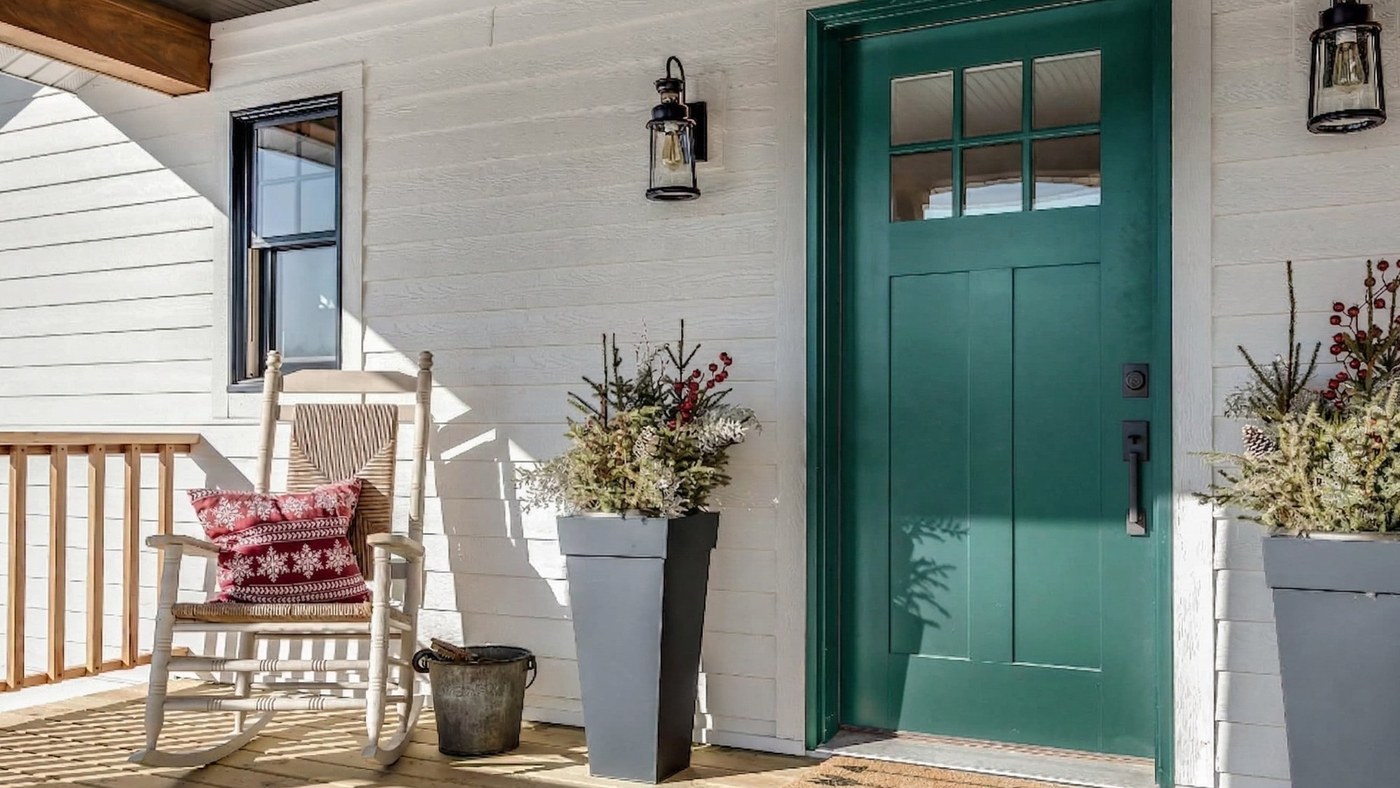
Here’s the short answer: if you’re selling within 2 to 3 years, steel wins on ROI (188% versus fiberglass’s 77%, according to the 2024 Remodeling Cost vs. Value Report). If you’re staying 5 or more years, fiberglass wins on total cost, because Colorado Springs beats up on steel doors in ways most national buying guides never mention (40°F daily temperature swings, roughly 25% more UV at altitude, and steel’s habit of conducting cold right through the threshold). I’ve installed enough of both to know exactly where each one earns its keep.
What’s the ROI Case for Steel vs. Fiberglass Doors in Colorado Springs?
Steel entry door replacement returns about 188% ROI, according to the 2024 Remodeling Cost vs. Value Report. That’s one of the highest returns of any home improvement project. Fiberglass door replacement returns about 77% nationally.
Steel’s high ROI comes from its low cost and big visual impact. A fresh entry door changes the whole look of a home’s front, and buyers notice right away (I’ve watched a new $1,400 door change someone’s whole impression of a house before they even step inside). A $1,400 steel door with a 188% return adds about $2,600 in sale value. A $2,500 fiberglass door with a 77% return adds about $1,900.
The practical takeaway: If you plan to sell within 2 to 3 years, steel pays you back faster on a smaller investment. If you plan to stay 5 or more years, fiberglass is the better choice for total cost in Colorado Springs. It needs less maintenance and holds up better against sun and temperature swings.
What Do Entry Doors Really Cost in Colorado Springs?
| Configuration | Steel Installed | Fiberglass Installed |
|---|---|---|
| Basic single door | $800–$1,800 | $1,500–$3,000 |
| Mid-range with glass insert | $1,500–$2,500 | $2,500–$4,000 |
| Door + sidelights | $2,500–$4,000 | $3,500–$6,000 |
| Full entry system (door + sidelights + transom) | $4,000–$6,000 | $6,000–$12,000+ |
Labor for a standard door swap costs $230 to $800, depending on whether the frame needs to be replaced too. A straight swap in the same opening takes 3 to 5 hours (a job I can usually knock out in an afternoon). Adding sidelights (the narrow glass panels next to the door) or a transom (the window above the door) means changing the framing, which adds half a day to a full day of labor.
You do not need a permit from the Pikes Peak Regional Building Department (PPRBD) for a straight door replacement, as long as the frame size and structure stay the same. If the project makes the doorway bigger, adds sidelights where there weren’t any before, or changes load-bearing framing (framing that helps hold up the house), you will need a permit.
How Does Colorado’s Climate Change the Steel vs. Fiberglass Equation?
Temperature swings. Colorado Springs regularly sees daily temperature swings of 40°F or more. Steel is a thin metal skin, so it heats up and cools down fast, expanding and shrinking with every swing. That movement stresses the weatherstripping (the rubber seal that blocks drafts around the door) and the seals where the door meets the frame. Fiberglass is thicker and expands and contracts much less, so it puts less strain on those seals. Over 5 to 10 years, a steel door here will need its weatherstripping replaced more often than the same door in a milder climate (I’ve swapped weatherstripping on 5-year-old steel doors more than once for exactly this reason).
UV exposure. South-facing and west-facing doors in Colorado Springs get roughly 25% more UV (ultraviolet light from the sun) than doors at sea level, because of our altitude. Steel door finishes, especially the factory-applied paint, fade and turn chalky and dull under that much sun, and the bare metal underneath can start to rust. A steel door that looks sharp at installation may need repainting within 5 to 8 years if it faces south. A quality fiberglass door holds its finish for 15 to 20 years.
Heat loss. Steel is a good conductor, meaning heat moves through it easily. In a Colorado winter, a steel door creates a noticeable cold spot right at the entry, and in extreme cold, moisture can freeze right at the threshold (the strip at the bottom of the doorway). Fiberglass is a natural insulator, so it blocks heat transfer much better. That difference shows up on your energy bill and in how drafty the entryway feels.
Security. Both steel and fiberglass hold up better against break-ins than wood. But the weak point on any door usually isn’t the door itself. It’s the strike plate (the metal plate in the frame that the lock’s bolt slides into) and the frame around it, something I check on every door I install whether the homeowner thinks to ask or not. A reinforced strike plate with 3-inch screws that reach into the framing behind it is the security upgrade that actually matters, no matter which material you choose.
What Should You Specify When Choosing a Door?
Pick fiberglass for south or west-facing entries, where UV damage is the main concern. Pick steel with a quality factory finish if you’re selling within 2 to 3 years and ROI is the priority. Pick fiberglass for high-end entries with sidelights and a transom, where long-term performance and looks matter most; the extra cost is worth it there.
Hardware matters on both door types. A multi-point locking system (one that locks the door to the frame at several points along its height, not just at the doorknob) adds real security. Weatherstripping grade is often the cheapest part of a door system, but it’s worth upgrading when the door is installed instead of replacing it three years later.
Every door project gets a written flat-rate estimate covering the door, frame assessment, hardware, and installation, with no hourly surprises.
Questions people ask
What is the ROI on entry door replacement in Colorado Springs?
Steel entry door replacement returns approximately 188% ROI according to the 2024 Remodeling Cost vs. Value Report. Fiberglass door replacement returns approximately 77% nationally. Steel's higher ROI is driven by low cost ($800–$1,800 installed) and high visual impact. If you're selling within 2–3 years, steel delivers faster payback. If you're staying 5+ years, fiberglass is the better total-cost decision for Colorado Springs due to lower maintenance and better UV and temperature performance.
How much does entry door replacement cost in Colorado Springs?
Basic steel single door: $800–$1,800 installed. Basic fiberglass single door: $1,500–$3,000. Mid-range with glass insert: steel $1,500–$2,500, fiberglass $2,500–$4,000. Door plus sidelights: steel $2,500–$4,000, fiberglass $3,500–$6,000. Full entry system with sidelights and transom: steel $4,000–$6,000, fiberglass $6,000–$12,000+. No permit from the Pikes Peak Regional Building Department (PPRBD) is required for a direct replacement where frame size and structure are unchanged.
Why does fiberglass perform better than steel in Colorado Springs?
Three things about Colorado's climate favor fiberglass. First, daily temperature swings of 40°F or more make steel, a thin metal skin, expand and contract a lot, which stresses the weatherstripping (the rubber seal around the door) and the frame seals over time. Fiberglass is thicker and moves much less, so it puts less strain on those seals. Second, south-facing doors get roughly 25% more UV than doors at sea level, and steel finishes fade and turn chalky under that much sun while fiberglass holds its color for 15 to 20 years. Third, steel conducts cold and can feel icy at the threshold in extreme winter weather, while fiberglass insulates naturally and stays warmer to the touch.
Ready to Get Started?
Flat-rate written estimate, no hourly surprises. Serving Colorado Springs, Monument, Fountain, Woodland Park, and the Pikes Peak region.