
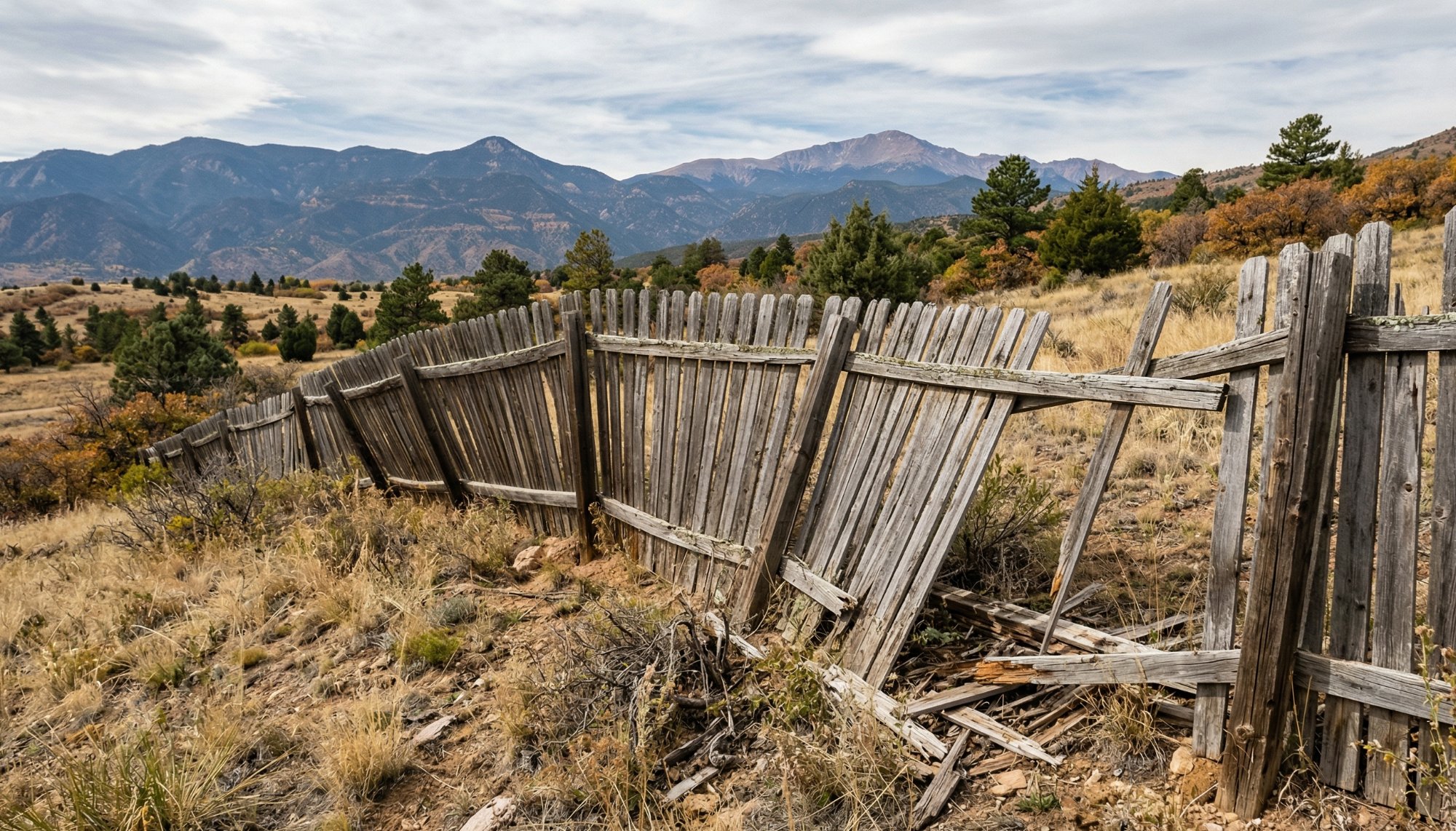
The average first frost date at the Colorado Springs airport weather station is October 5. Homes along the Palmer Divide (Monument, Palmer Lake, Black Forest) usually see a hard freeze 2 to 3 weeks earlier. At 8,500+ feet in Woodland Park, it can hit by mid-September.
Most homeowners wait until they see a freeze in the forecast before they think about winterizing. That’s too late. Here’s what needs to happen before that first freeze, and why the timing matters.
The Core Winterization Sequence
1. Exterior Hose Bibs: Shut Off and Drain Down
This is the first and most important task. Every outdoor hose bib (the faucet where you hook up a garden hose) needs to be shut off at its indoor shutoff valve, then drained. Here’s the order: close the indoor valve first. Disconnect any hoses. A hose left connected traps water inside the bib, and that trapped water will freeze. Then open the outdoor bib so any water left in the line can drain out. Leave the outdoor handle open all winter, so any leftover water can drain out instead of freezing inside the pipe.
Check what kind of hose bib you have. Older homes are more likely to have standard bibs, which need that indoor shutoff step every year. Newer homes often have frost-free bibs instead. A frost-free bib has a long stem that reaches back into the warm part of the wall, so it drains itself. That only works if there’s no hose attached. A hose left on traps water between the hose and the bib, and it can still freeze and crack the bib.
2. Pipe Insulation in Vulnerable Areas
In Colorado Springs, the highest-risk spots are: exposed pipes in unheated crawl spaces, pipes inside exterior walls of older homes, pipes in unheated garages or utility rooms, and any water line that runs near an outside wall or through a space with no insulation.
Foam pipe insulation is cheap and easy to install on pipes you can reach. For pipes in crawl spaces, or anywhere that gets long stretches of below-zero cold, self-regulating heat tape works better. That’s a heating cable that senses the temperature and puts out more heat in the coldest spots. We install a lot of heat tape in crawl spaces. It costs far less than a burst pipe and the water damage that follows.
3. Swamp Cooler Winterization
This is the step most Colorado Springs homeowners forget until they’re already dealing with cold weather. Here’s the correct order:
- Turn off the water supply to the cooler at its shutoff valve (usually in the attic or right next to the unit).
- Turn the cooler on for a minute to clear leftover water out of the pump and the lines that feed the pads. Then turn it off.
- Disconnect the water line from the outside supply and remove it.
- Take out the cooler pads and clean the base pan. Don’t leave standing water in it: it will freeze and can crack the pan.
- Cover the unit with a real cooler cover, not a tarp. A form-fitting cover keeps cold air from getting in.
- Seal the inside vent with a fitted magnetic vent cover. This stops cold air from sinking down through the ducts all winter, which is a real source of heat loss in a home with a swamp cooler.
4. Weather Stripping: The Most Overlooked Item
Colorado Springs sits at 6,000+ feet, and the stronger sunlight (UV) up here breaks down weather stripping faster than most homeowners expect. Foam and rubber stripping that looked fine last year can be cracked, flattened, or pulled away from the door frame. Run your hand around the edge of an exterior door on a cold, windy day. If you feel air moving, the stripping needs replacing.
Door sweeps (the strip at the bottom of a door that seals the gap to the floor) fail often and are usually the biggest source of cold air leaking in. A good door sweep costs under $20 and takes 15 minutes to install.
5. Furnace and Thermostat Check
Replace your furnace filter before the heating season starts. A clogged filter blocks airflow, drives up your energy bill, and can make the heat exchanger (the metal part that transfers heat into your home’s air) overheat and crack. If you have an older thermostat, now is a good time to upgrade to a programmable or smart one. Set up right for Colorado’s swings of 40°F or more between day and night, it can pay for itself in the first season.
Palmer Divide Enhanced Package
If you live in Monument, Palmer Lake, Black Forest, or Woodland Park, the standard checklist isn’t enough. At 7,000+ feet, temperatures drop harder and faster, snowfall is heavier, and the higher elevation and stronger winds along the Palmer Divide make conditions tougher than in Colorado Springs proper.
For Palmer Divide homes, also do this: check your attic insulation. Ice dams (ridges of ice that build up at the roof edge) form when heat leaking up from the house warms the roof deck, melts the snow sitting on it, and that meltwater refreezes once it reaches the cold edge of the roof. Good attic insulation keeps that heat inside the house where it belongs, so this happens less. Add heat tape to every exposed supply line, not just the highest-risk ones. And check that your heating system is sized for the temperatures you actually get up there. A furnace that’s enough for Colorado Springs can be too small for a Woodland Park winter.
Smart Technology for Freeze Protection
Two smart home upgrades are especially useful for Colorado Springs homeowners: a programmable thermostat set up for our temperature swings, and an AI water monitoring system like Phyn Plus or Moen Flo. The water monitoring system is worth considering if you travel during ski season. It watches your water pressure around the clock, picks up the warning signs of a freezing pipe before it bursts, and shuts off your main water supply on its own if it detects a problem. More detail in our smart home freeze protection guide.
When to Schedule
September. Not because October is too late for most of the checklist, but because booking in September means you’re not competing with every other homeowner who waited until a freeze showed up in the forecast. We get busy fast in the two weeks before the first hard freeze every year. September appointments are easy to get. October is tight.
You get a written flat-rate estimate on every winterization project. We tell you exactly what we’re doing, what it costs, and when we’ll be done, before we ever start work.
Questions people ask
When should I winterize my home in Colorado Springs?
September is the right time to schedule winterization. Colorado Springs' average first frost date is October 5. Homes along the Palmer Divide. Monument, Palmer Lake, Black Forest. Typically see hard freeze conditions 2–3 weeks earlier. At 8,500+ feet in Woodland Park, it can be mid-September. Scheduling in September avoids the rush when every homeowner waits until the first freeze forecast. October appointments are genuinely difficult to get.
How do I winterize a swamp cooler in Colorado Springs?
The correct sequence: (1) Turn off the water supply to the cooler at its shutoff valve, (2) Run the cooler briefly to bleed water from pump and distribution lines, then turn off, (3) Disconnect and remove the water line from the exterior supply, (4) Remove cooler pads and clean the reservoir. Don't leave standing water, (5) Cover the unit with a form-fitting cooler cover that blocks air infiltration, (6) Seal the interior vent with a fitted magnetic vent cover to prevent cold air from drafting down through the ducts all winter.
What are the highest-risk pipe locations in Colorado Springs homes?
The highest-risk areas in Colorado Springs: exposed pipes in unheated crawl spaces (the single highest-risk location), pipes in exterior walls of older homes with inadequate insulation, pipes in unheated garages or utility rooms, and any supply line that runs near an exterior wall or through an uninsulated space. Older homes in Old North End and Manitou Springs are particularly vulnerable due to pre-modern pipe placement standards.
Ready to Get Started?
Flat-rate written estimate, no hourly surprises. Serving Colorado Springs, Monument, Fountain, Woodland Park, and the Pikes Peak region.