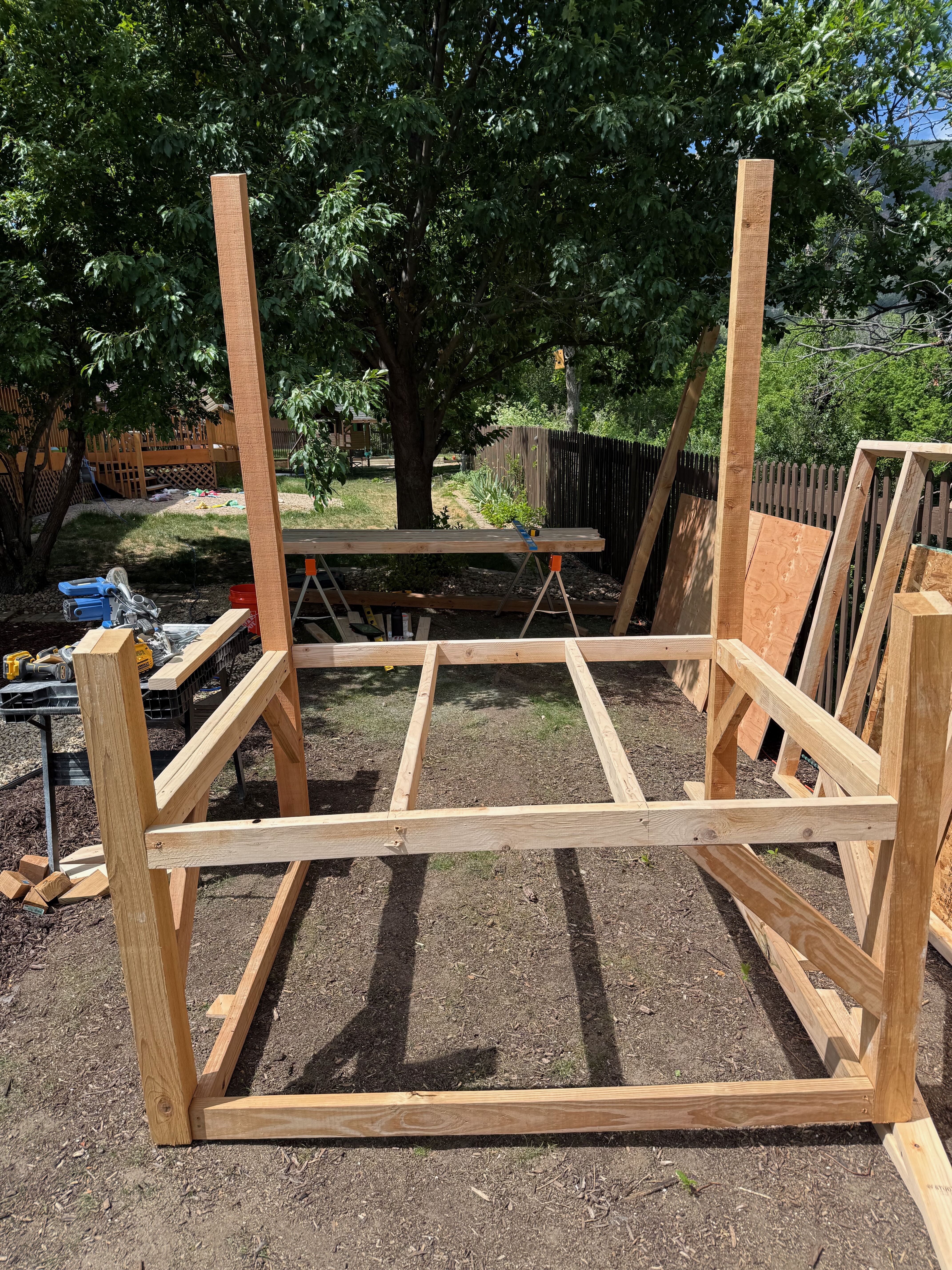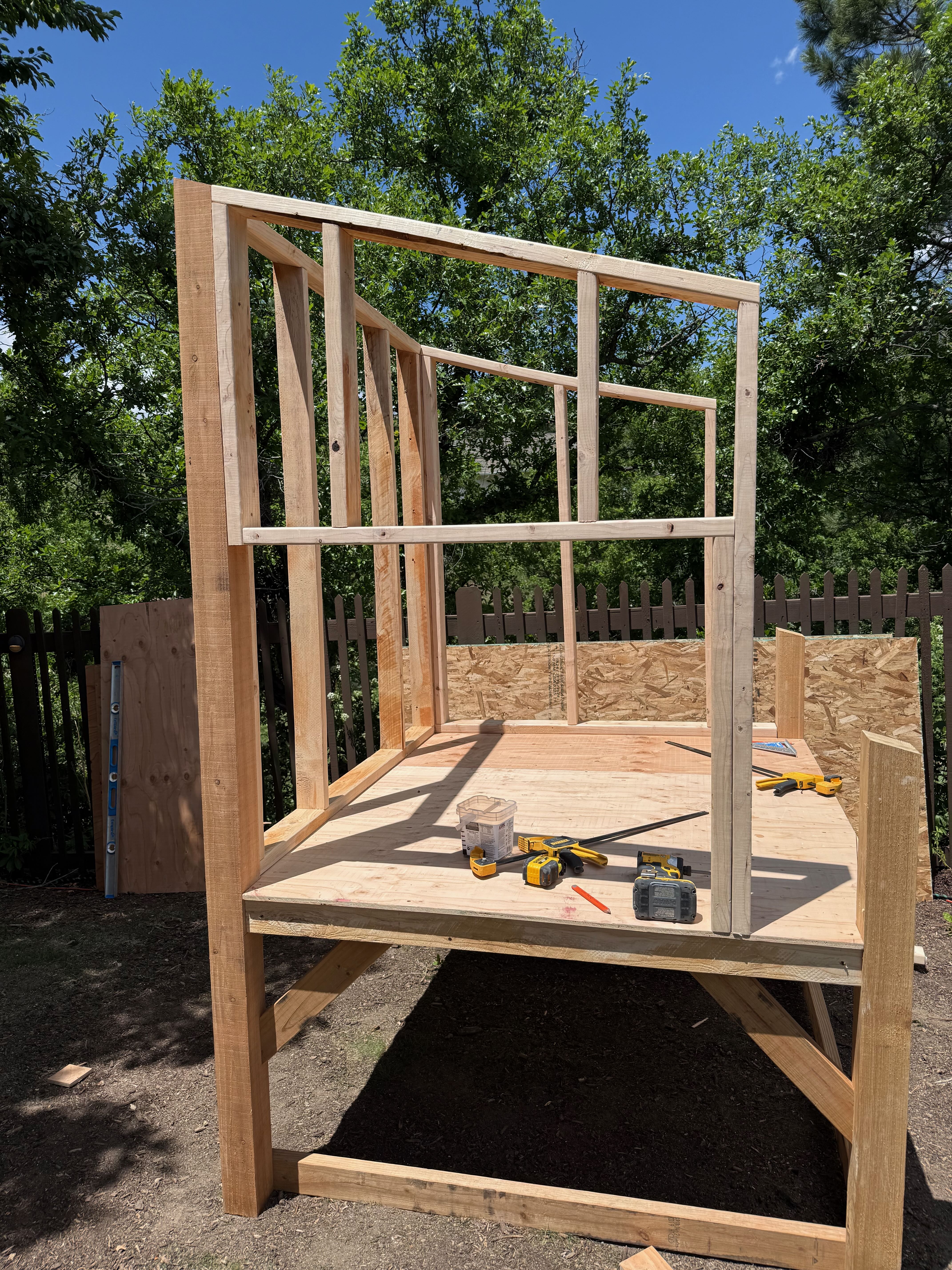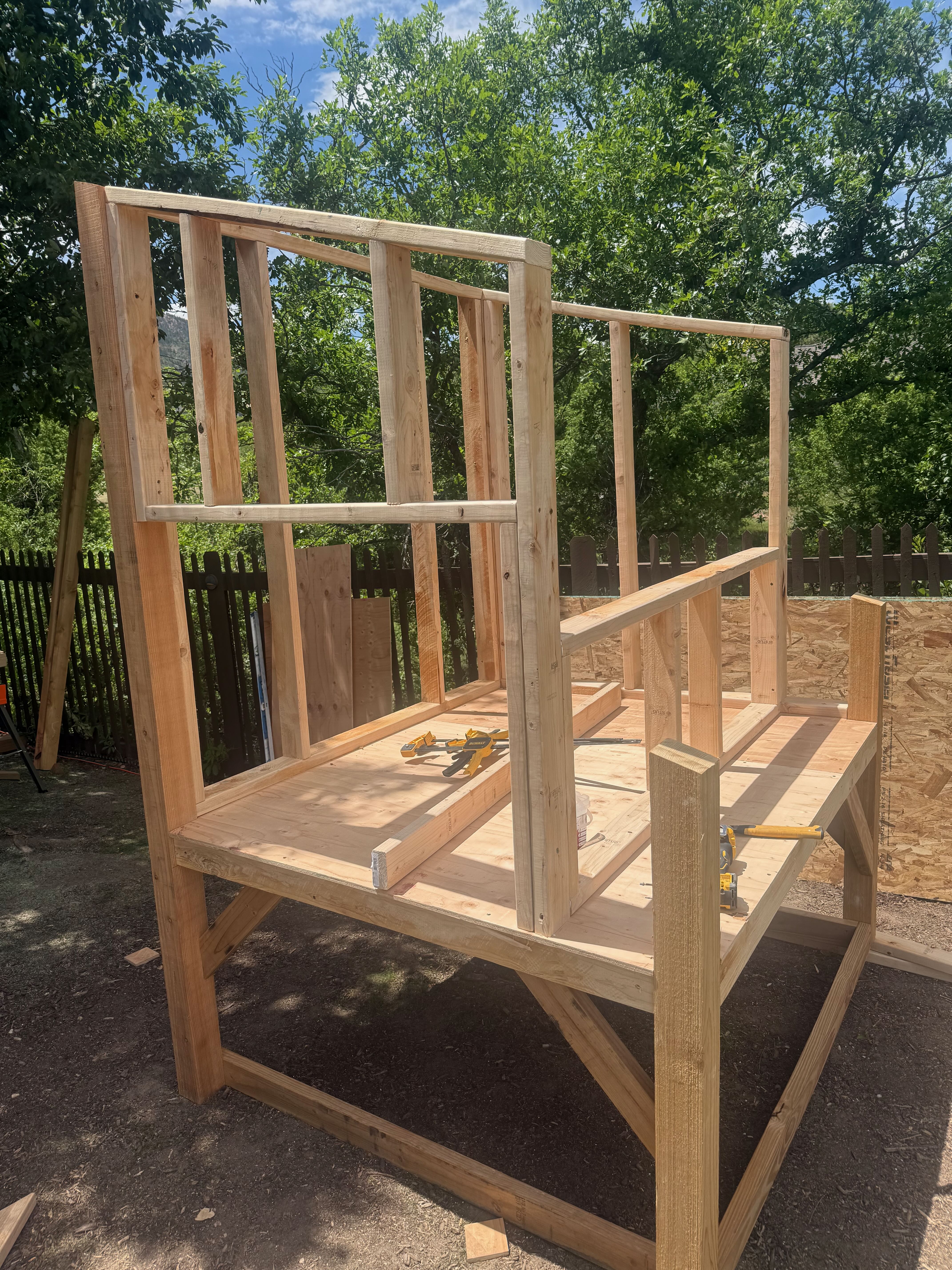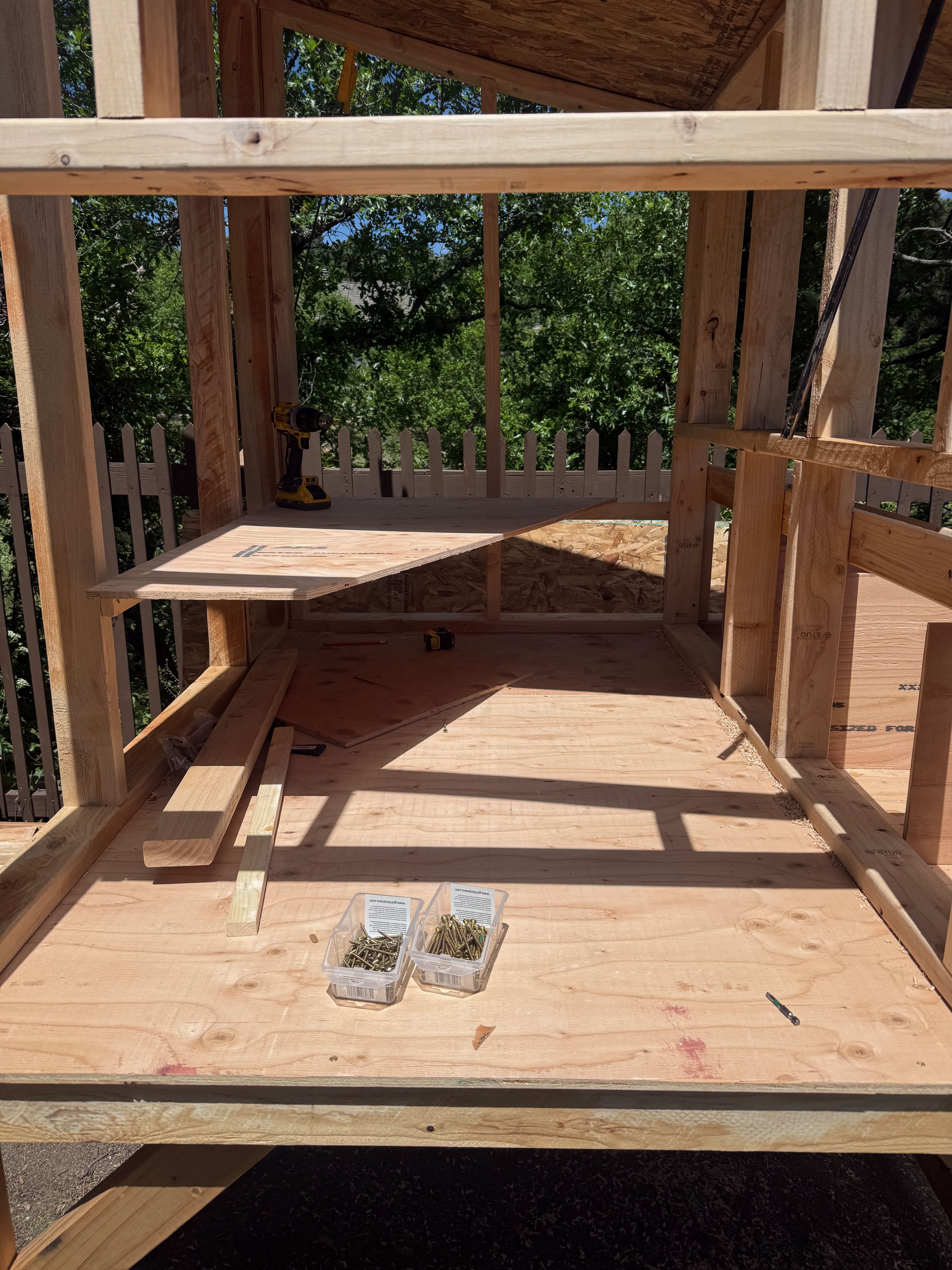
The lot backs up to a fence line separating a residential property in the Broadmoor area from brushy open space below Cheyenne Mountain Resort. The clients had seen raccoons, coyotes, hawks, deer, and skunks on or near the property. They wanted chickens. That combination meant the coop had to be built to a different standard than a typical backyard flock setup.
This isn’t a decorative coop. Everything about this build prioritizes function, cleanability, and predator resistance, with cedar siding that makes it look like it belongs in a neighborhood where the homes are worth looking at.
The Problem
Standard chicken coops fail at the wire. Most kit coops and contractor-built coops use standard chicken wire, which is designed to contain birds, not exclude predators. Raccoons pull through it. Hawks reach through the large hexagonal openings. Coyotes chew through it at ground level given enough motivation.
The lot’s proximity to open space meant this coop would be tested. A raccoon that discovers a flock will return every night until it gets in or gives up. The build had to make giving up the easier option.
The second problem was cleanability. A coop you can’t clean efficiently doesn’t get cleaned as often as it should. Ammonia buildup from droppings is the leading cause of respiratory illness in backyard flocks. The design had to make daily and weekly maintenance fast enough that it actually happens.
The Solution
Elevation
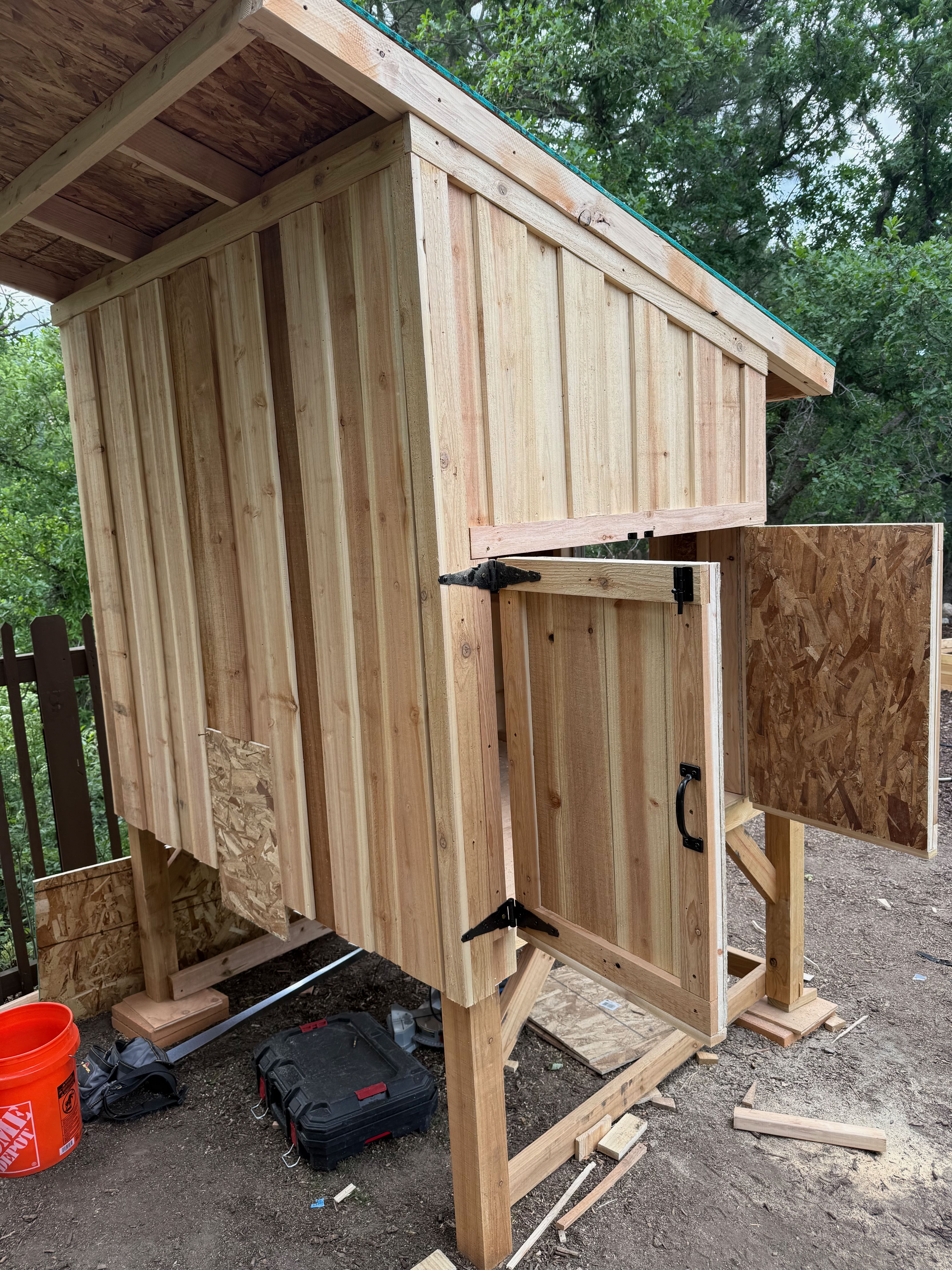
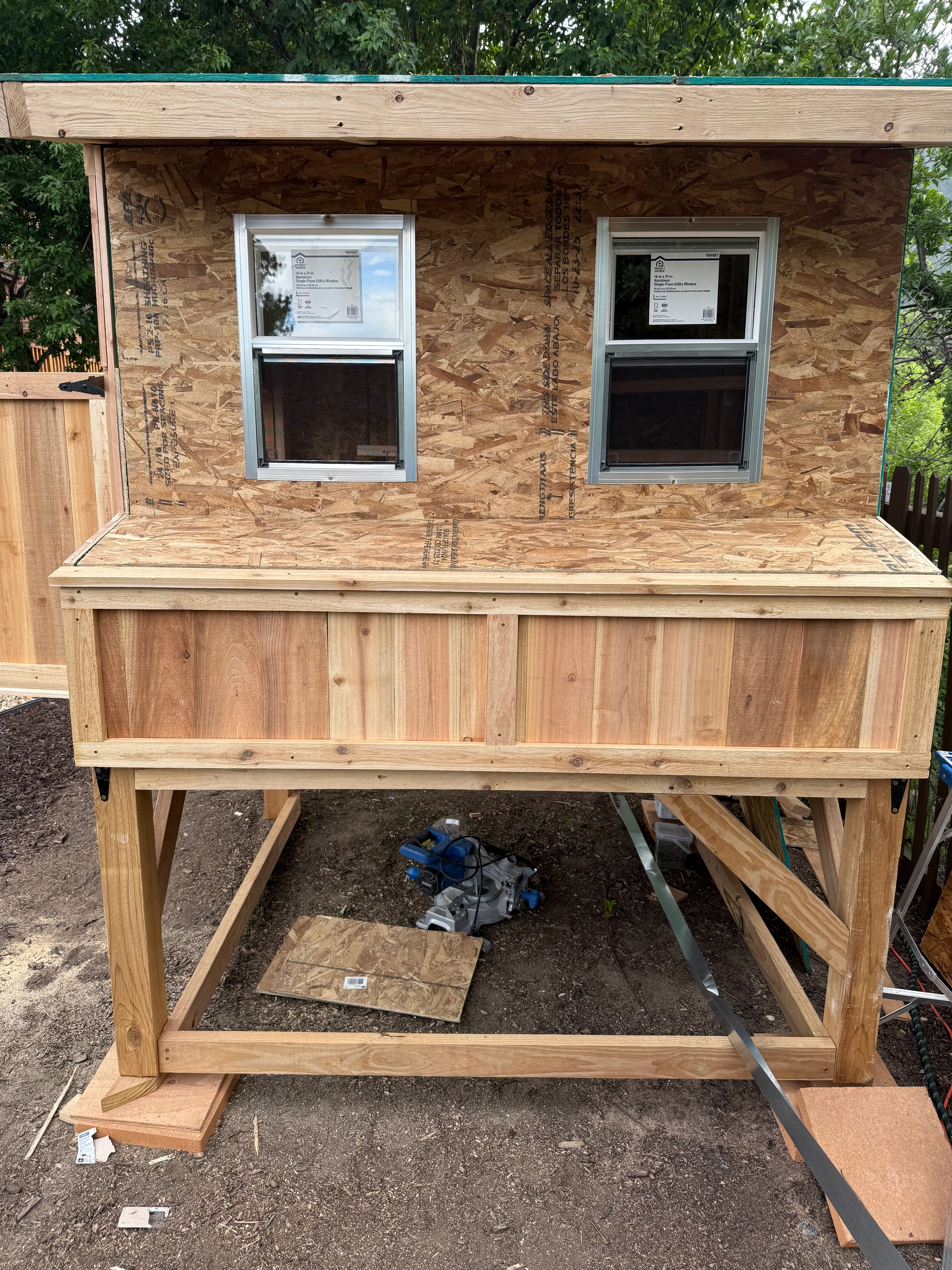
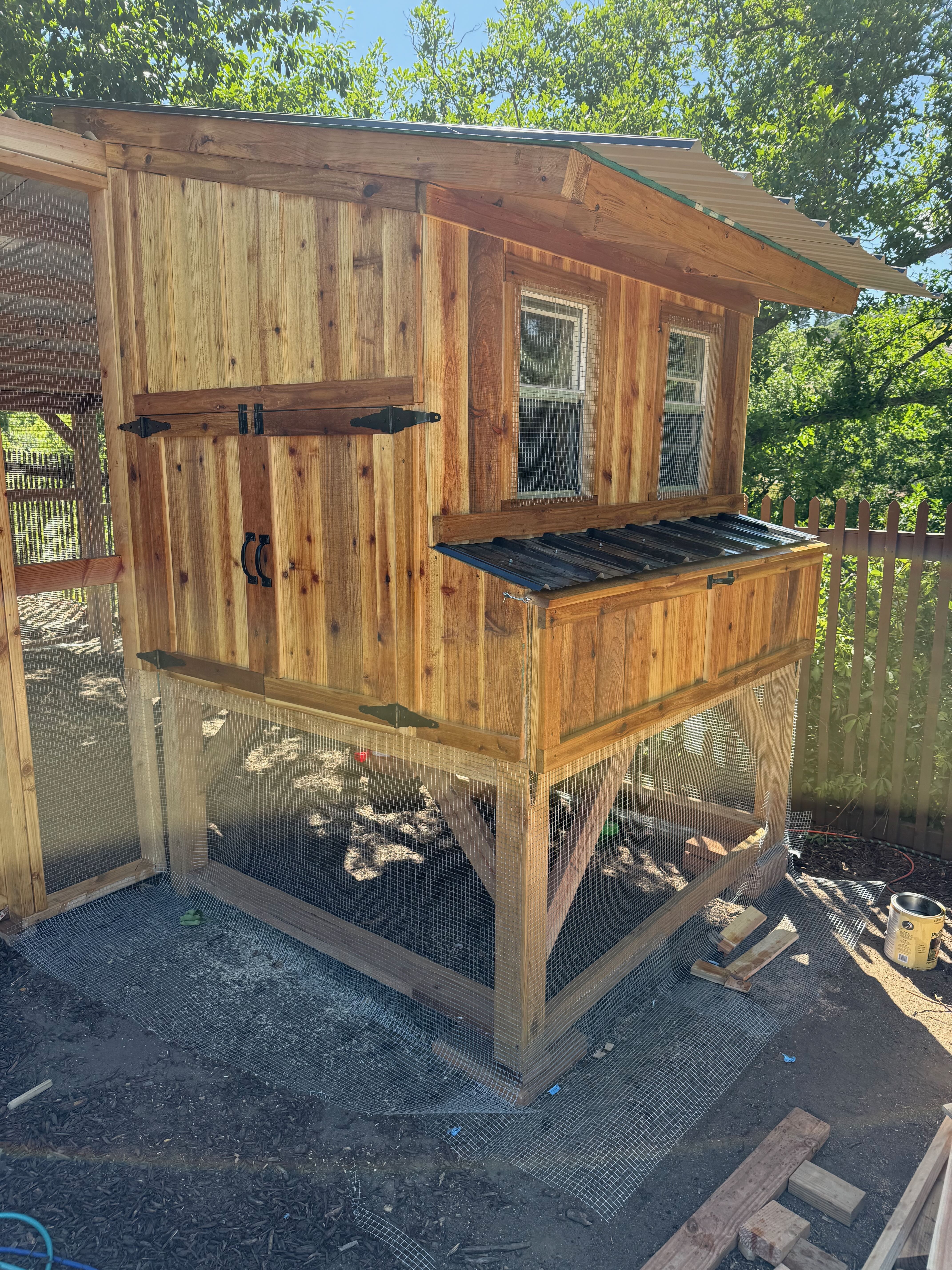
The coop sits elevated on pressure-treated corner posts, with the deck edge high enough that a standard wheelbarrow slides underneath. Droppings fall through the slatted floor section onto a removable collection tray, or get swept directly into the wheelbarrow during weekly cleanout. What would normally be a 20-minute crouching chore takes about 5 minutes standing up.
Cedar siding runs on the exterior only, applied over OSB sheathing. This is an important detail: cedar off-gasses aromatic compounds that cause respiratory problems in chickens when used inside an enclosed coop. The OSB creates a barrier between the cedar and the interior living space. Interior framing is Douglas fir. The birds never contact the cedar directly.
Hardware Cloth Throughout
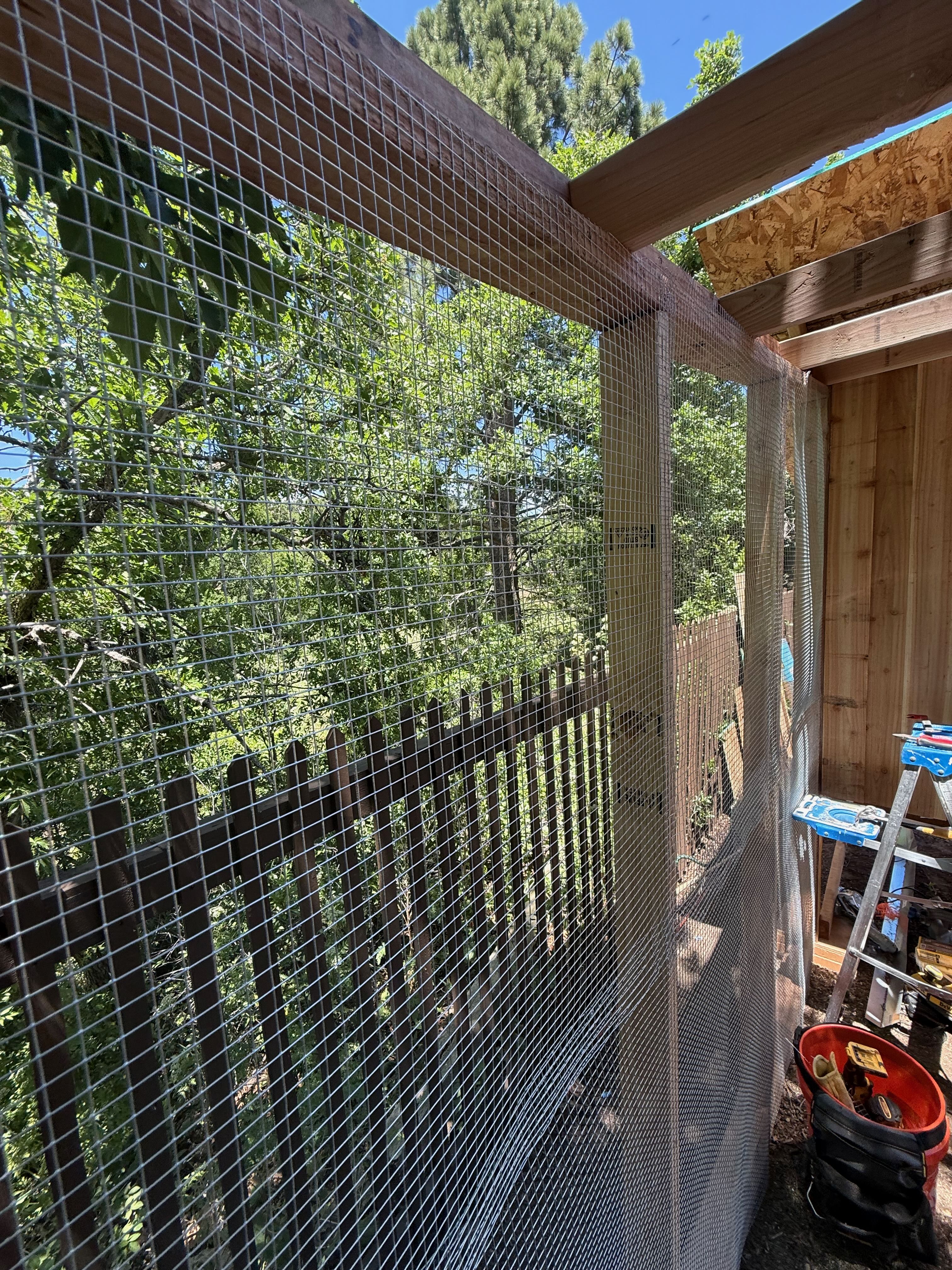
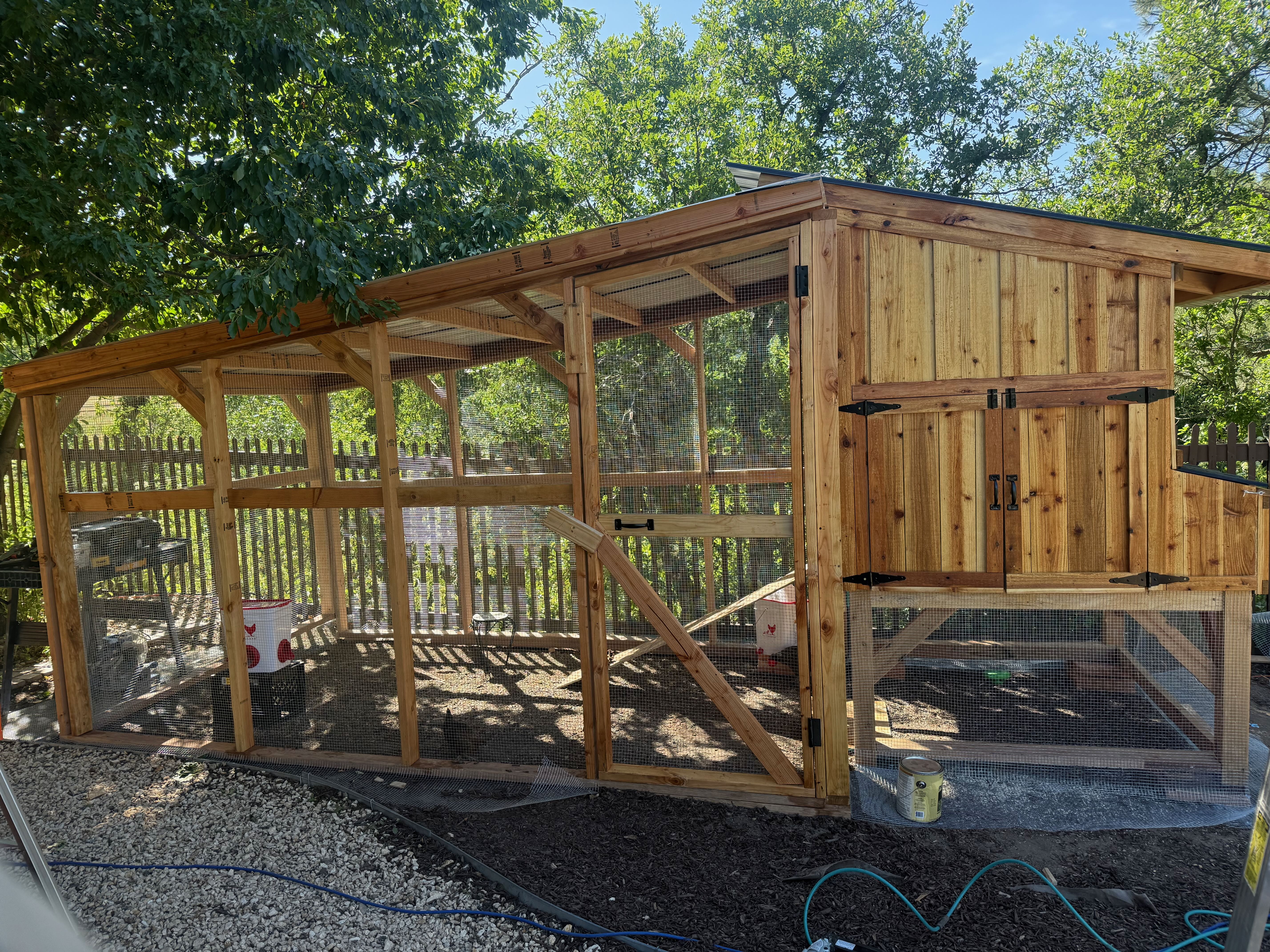
Every enclosure surface uses 1/2-inch welded wire mesh (hardware cloth), not chicken wire. The distinction matters. Hardware cloth is galvanized steel welded at every grid intersection. It doesn’t pull apart, doesn’t flex enough for a raccoon to work a hole larger, and the 1/2-inch openings don’t allow reach-through attacks from hawks or raccoons.
The run also has a hardware cloth skirt: wire laid flat on the ground extending 12 inches outward from the run perimeter, secured with landscape staples and covered with a few inches of gravel. A digging predator (coyote, skunk, fox) hits the wire before getting under the wall. This eliminates the most common ground-level vulnerability in run construction.
Coop Access and Egg Collection
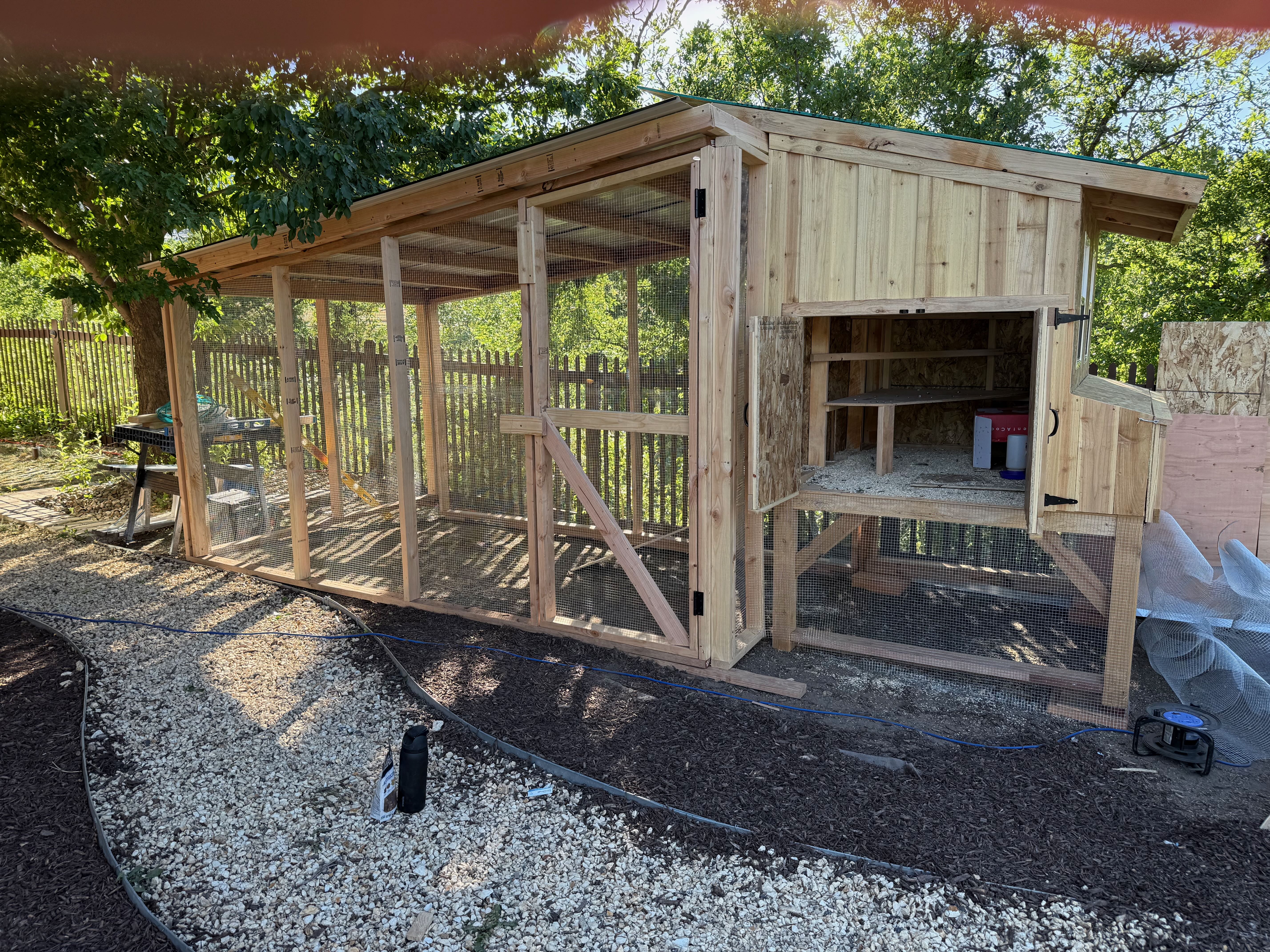
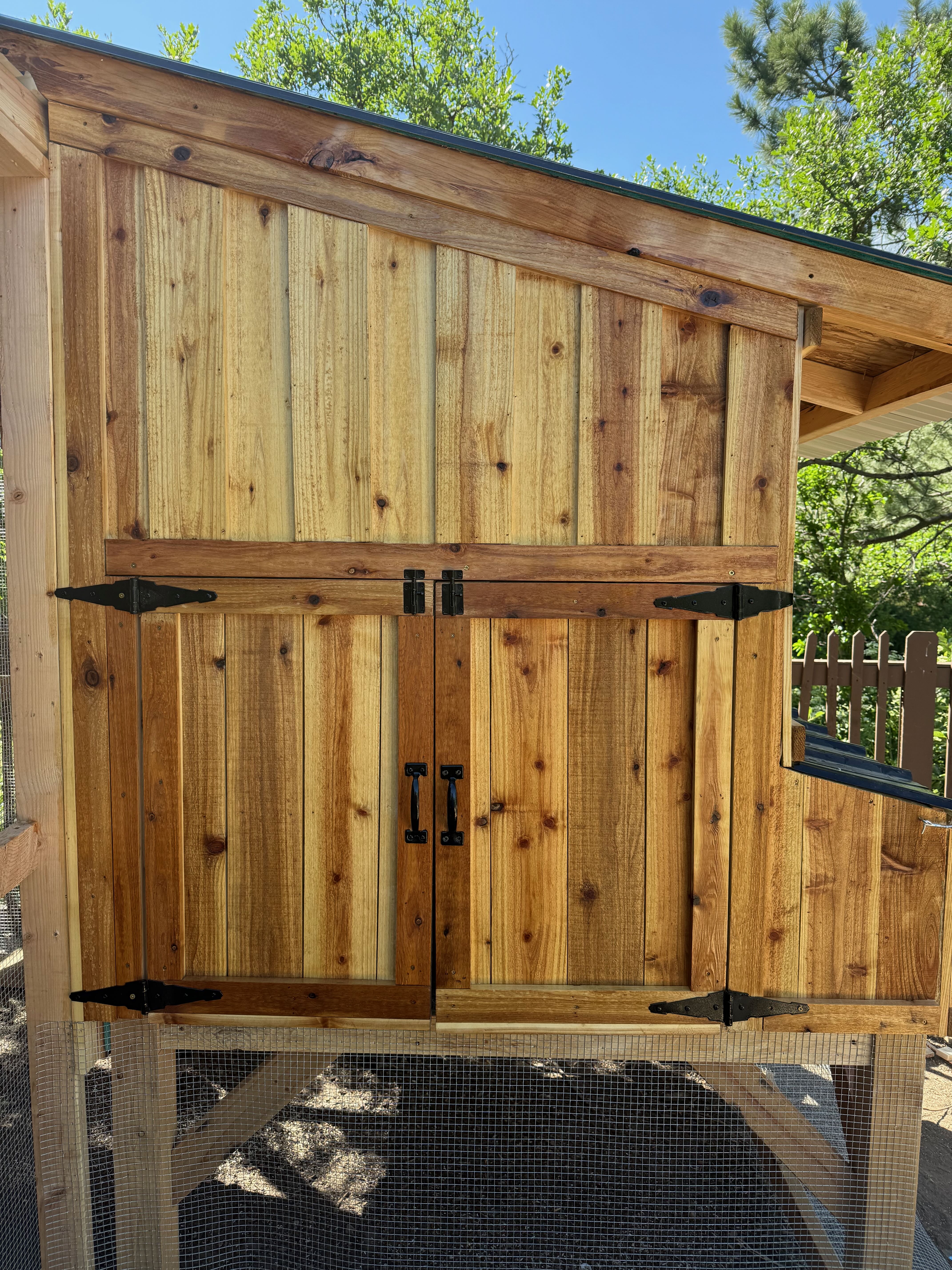
The coop has three points of access, each with its own job. A pair of large exterior doors open the full interior for cleaning, inspection, and maintenance, so the inside can be reached without going through the run and without leaving any gap in the enclosure while work is happening. A dedicated nesting box door on the exterior lifts open for quick daily egg collection without entering the coop at all. A pop door with a manual slide latch lets the birds move between the coop and the run.
Walk-In Run
The run is full walk-in height, allowing the owner to enter, move freely, and maintain the space without crouching. The gate latches with a carabiner clip, which sounds simple but matters: raccoons are surprisingly capable with standard hook latches and even some twist latches. A carabiner requires two coordinated hand motions to open.
The Build
Day 1: Site prep, post setting. Pressure-treated 4x4 corner posts set below grade in concrete. Layout confirmed, posts set to level.
Day 2: Framing. Elevated deck platform, coop framing, run framework. OSB sheathing on coop exterior.
Day 3: Cedar siding, roofing, hardware cloth installation on coop and run walls.
Day 4: Hardware cloth skirt, doors, latches, pop door. Interior finish: roost bars, nesting boxes, droppings tray.
Day 5 (partial): Final details, clearcoat on cedar siding, client walkthrough.
The build ran two days longer than originally scoped, not from any construction complication but from a material sourcing delay on the hardware cloth quantity needed. Rural King had it; delivery took an extra day. Scoped for 3 days, delivered in 5.
What It Actually Cost
| Line Item | Actual Cost |
|---|---|
| Materials | $3,309 |
| Labor | $2,590 |
| Total | $5,899 |
Materials included pressure-treated posts, framing lumber, OSB sheathing, cedar siding, hardware cloth (significant quantity for full perimeter plus skirt), roofing, exterior clearcoat, all hardware and fasteners, roost bars, nesting boxes, and the droppings tray.
For context: a comparable kit coop with a small attached run runs $800–$1,500 at retail. It uses chicken wire. It has no hardware cloth skirt. It isn’t elevated. It won’t last five Colorado Springs winters and won’t stop a motivated raccoon. This build will do both.
What I Learned
Cedar cannot be used on coop interior surfaces. This was something I confirmed in detail during this project and subsequently updated in the chicken coop guide on this site. The aromatic oils that make cedar a great exterior wood are the same compounds that cause respiratory problems in chickens when the wood is inside the enclosed space. Interior framing should always be Douglas fir, pine, or similar non-aromatic lumber. Cedar on the exterior over OSB is fine. Cedar inside is not.
Corner posts should always be pressure-treated, regardless of what the rest of the structure uses. Ground contact, even indirect, in Colorado’s freeze-thaw cycle will rot untreated posts faster than any other failure point in the build.
The hardware cloth skirt is non-negotiable on any lot with documented wildlife pressure. It adds maybe $150 in materials and 2 hours of labor. It eliminates the most common predator entry point. Every coop I build near open space or wildlife corridors gets a skirt.
The Finished Result
The clients have had zero predator incidents since the coop went in. The elevated design makes cleanout fast enough that it happens on schedule. The cedar siding, clearcoated, looks at home in a neighborhood where the properties are well-maintained.
For a built-right chicken coop in Colorado Springs, call (719) 243-9718.
Project Photos