
New wood and composite decks, deck repair and restoration, siding, fascia and fence repair, and entry doors, built for 6,035 feet of UV, hail, and freeze-thaw. Free written estimate, flat-rate pricing.
Deck builders in Colorado Springs, ours included, charge about $25–$55 per square foot for a pressure-treated wood deck and $35–$95 per square foot for composite, and I also handle deck repair, siding repair, fascia, fences, and entry doors on the same visit. This page is for homeowners who want one person to build or fix the outside of the house and deal with the permit, instead of juggling a deck company, a siding company, and a fence company. The key qualification: nearly every deck needs a PPRBD permit, and every footing has to go below the 30-inch frost line (48 inches in Woodland Park), so we price the job that way from the first estimate. We work in Colorado Springs and the surrounding areas, including Monument, Black Forest, Fountain, and Woodland Park. We do not do roofing, so a hail-damaged roof gets referred to a roofer. Every project starts with a free written estimate and flat-rate pricing, so the number you agree to is the number you pay.
At 6,035 feet, UV in Colorado Springs runs about 25% stronger than at sea level, which is why wood stain here wears out in 2–3 years instead of the 4–5 years printed on the can. Add 100+ freeze-thaw cycles a year working water into every exterior joint and seam (that cycle only matters outdoors, on ledgers, siding seams, and post tops), plus 3–4 significant hailstorms a season between mid-April and mid-September. Those conditions are why a deck or a siding wall built to a generic national spec looks tired here in half the time, and why our south-facing deck guide tells people with a western or southern exposure to plan for more upkeep.
We handle six kinds of exterior work, from a single fascia board to a ground-up deck:
New Decks (Wood or Composite): Footings, framing, decking, stairs, and railings, built to the 30-inch frost line and permitted through PPRBD. I like deck work more than almost anything else we do, and the deck builders guide covers how I price and build one. Wood is cheaper up front, and composite trades a higher install cost for no staining. Manufacturers back the boards with long fade and stain warranties (Trex’s fade and stain warranty runs 25 years for a residential Transcend deck), but a warranty covers the board, not the framing underneath. Our composite vs. wood decking comparison puts the 20-year numbers side by side.
Deck Repair, Restoration & Staining: Replacing rotted boards and joists, re-securing the ledger, sanding and cleaning, and applying a UV-resistant penetrating stain. Restoration is the right call when the frame is sound and the surface is tired. The deck restoration guide, the deck staining guide, and the deck joist rot guide explain which situation you are in.
Railings, Guards & Stairs: Under the International Residential Code, a deck needs a guard (the railing around the edge) when the walking surface is more than 30 inches above the ground within 36 inches of the edge, and the guard has to stand at least 36 inches tall (IRC R312.1.2). Balusters (the vertical bars) have to be spaced so a 4-inch sphere cannot pass through. Our deck railing and guardrail guide covers the load rule, stair handrails, and which materials survive our UV.
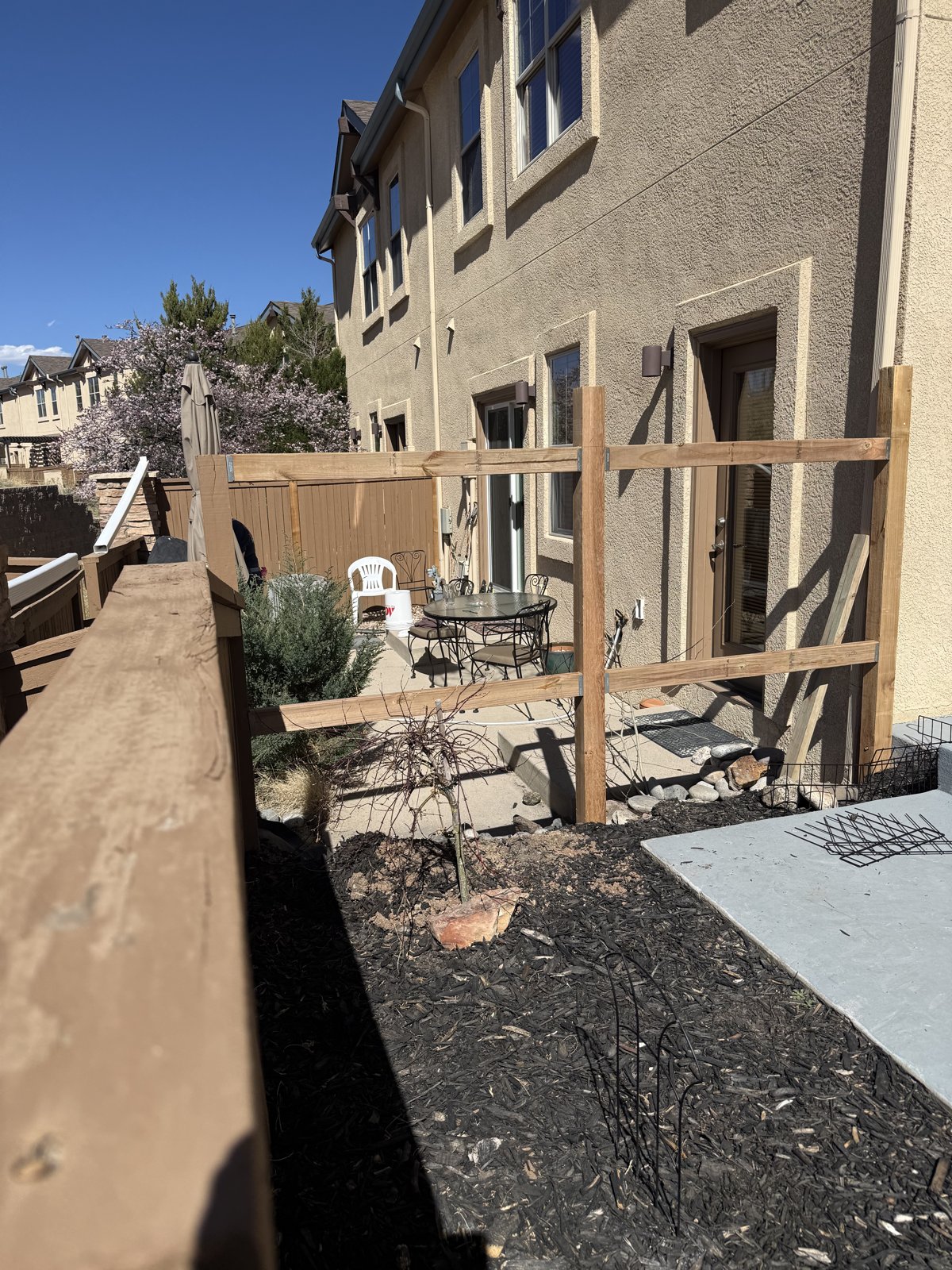
Fence Repair & Post Resets: Leaning posts, broken panels, rotted rails, and staining. I’ve reset more leaning fence posts than I can count, and every one that had failed was set above the frost line. See the fence repair guide and the frost line guide.
Siding, Fascia, Soffit & Trim: Replacing hail-cracked or rotted lap siding, fascia, soffit, and exterior trim, matching the existing profile, and re-caulking and priming every cut edge. We repair the house’s siding and trim, not the roof. The siding repair guide compares LP SmartSide, fiber cement, and vinyl, and the hail season prep checklist shows what to check after a storm.
Entry Doors, Sliding Door Tracks & Weatherstripping: Installing and rehanging entry doors, repairing sliding door tracks, and sealing drafts. The steel vs. fiberglass door guide helps you choose, and the door weatherstripping guide covers the cheap fixes first.
Pergolas and other shade structures live on our garden and outdoor living page, and the seasonal services page covers spring checkups and fall prep.
A new deck in Colorado Springs runs about $25–$55 per square foot in pressure-treated wood and $35–$95 per square foot in composite, while repairs and maintenance are priced by the board, the foot, or the post. These are market ranges for installed work, not a quote on your house, and the scope (what is under the boards) moves a project between tiers more than the square footage does.
| Scope | Typical Cost | Permit? |
|---|---|---|
| Maintenance and small repairs: staining and sealing, fence posts, fascia and siding patches | Deck staining $1.39–$4.04/sq ft; fence post replacement $250–$600 per post; fascia $5–$12/linear ft; siding repair $2–$14/sq ft | Usually no; siding replacement is on PPRBD’s permit list |
| Structural repairs and upgrades: deck boards, railings, stairs, new footings, entry doors | Deck board replacement $10–$50/sq ft; railing $20–$80/linear ft; deck stairs $115–$210 per stair; prehung entry door with frame $800–$4,000 | Often yes when framing, footings, or guards change |
| New deck, wood or composite | Pressure-treated wood $25–$55/sq ft; composite $35–$95/sq ft | Yes |
A few assumptions sit behind those numbers. Deck prices assume installed work on a deck of roughly 300 square feet, including footings, framing, and decking, and some local bids fold in railings and stairs while others price them separately, so ask what a bid includes before you compare two of them. The low end is a low, simple wood deck, and the high end is an elevated, multi-level, or premium capped-composite deck. Staining assumes cleaning and stain on a deck in decent shape, and a strip-and-stain or a railing-heavy deck lands near the top. Siding repair varies by material: vinyl runs toward the bottom of the range and fiber cement near the middle. The entry door range is for a prehung door installed with its frame and old-door disposal, and a door-only labor swap on an existing frame costs less. For how I turn those numbers into a flat-rate bid, see our handyman pricing guide.
Not sure which tier your deck or siding falls into? A free written estimate gives you a flat-rate number before any work starts.
Request Free Estimate → (719) 243-9718
You need a permit for a deck, and you do not need a building permit for a fence under 7 feet. PPRBD, the Pikes Peak Regional Building Department, lists decks (including composite) on its permit list, along with exterior siding and stucco, roofing, and patio or deck covers. Its list of work that needs no permit includes fences less than 7 feet tall, though a fence 6 feet or taller inside Colorado Springs needs zoning approval, and your HOA may have its own rules on height, material, and color.
For decks, the footings are what the inspector cares about most. El Paso County’s frost line is 30 inches (PPRBD 2023 RBC 302.4.63), and Woodland Park in Teller County is 48 inches, so footings that stop short of those depths get heaved up by frozen soil. The permit process includes inspections before the concrete is poured and before the decking goes down, which is also when the ledger connection gets checked. PPRBD’s list shows no size exemption for decks, so call PPRBD at (719) 327-2880 with your address before you assume a small one is exempt. PPRBD also states that it is illegal for a homeowner to pull a permit for a contractor hired to do the work, which is why the permit goes in under our name when we build your deck. Skipping a required permit tends to come up at resale, and our remodeling permits guide covers how.
For repairs, maintenance, and like-for-like replacements, a handyman is the right fit, and for a new deck or a structural repair you want someone who pulls the permit and stands behind the inspection. The line is the permit and the structure, not the size of the check.
Staining, board swaps, fence panels, fascia and trim, door installs, and weatherstripping are handyman-scope jobs, and having one person do them keeps the schedule simple. A new deck, a rebuilt ledger, or new footings is structural work under a PPRBD permit, so we build those ourselves and handle the inspections instead of leaving them to you. We stay inside what we do well: no roofing, no HVAC, and no major mechanical work, and if a hail storm hit your roof, we will tell you up front to call a roofer for that part and we will fix the siding, fascia, and trim around it.
Most repairs take one to three days, a new deck takes roughly one to three weeks of build time once the permit is approved, and the best working window is late spring through early fall. Those are my job-site estimates, and weather and permit review move them. Larger or elevated decks usually go through plan review first, which our deck builders guide puts at about 1–3 weeks.
For staining, the window runs from the last frost (around May 8) to the first frost (around October 5), and the wood surface should stay between 50°F and 90°F while the stain goes on and for two days after, per our deck staining guide. Hail season runs mid-April to mid-September, so siding, fascia, and trim repairs tend to stack up after each storm. If your house took a hit, the sooner we look, the less water gets behind the damage before winter. Winter is better for door installs, weatherstripping, and carpentry repairs, since concrete footings and stain both want warmer weather.
The most common surprises on an older Colorado Springs deck are a rotted ledger from missing flashing and joist ends gone soft, and on a siding wall they are cracked fascia and failed caulk. These are patterns by home age, not predictions for your house, which is why the estimate covers what we can see and we tell you before touching anything we find beyond it.
A hail storm can damage a roof and siding at the same time. A roofer handles the roof, and we handle everything else on the exterior, including the photo documentation of siding and fascia damage that your insurance adjuster will ask for.
Request Free Estimate → (719) 243-9718
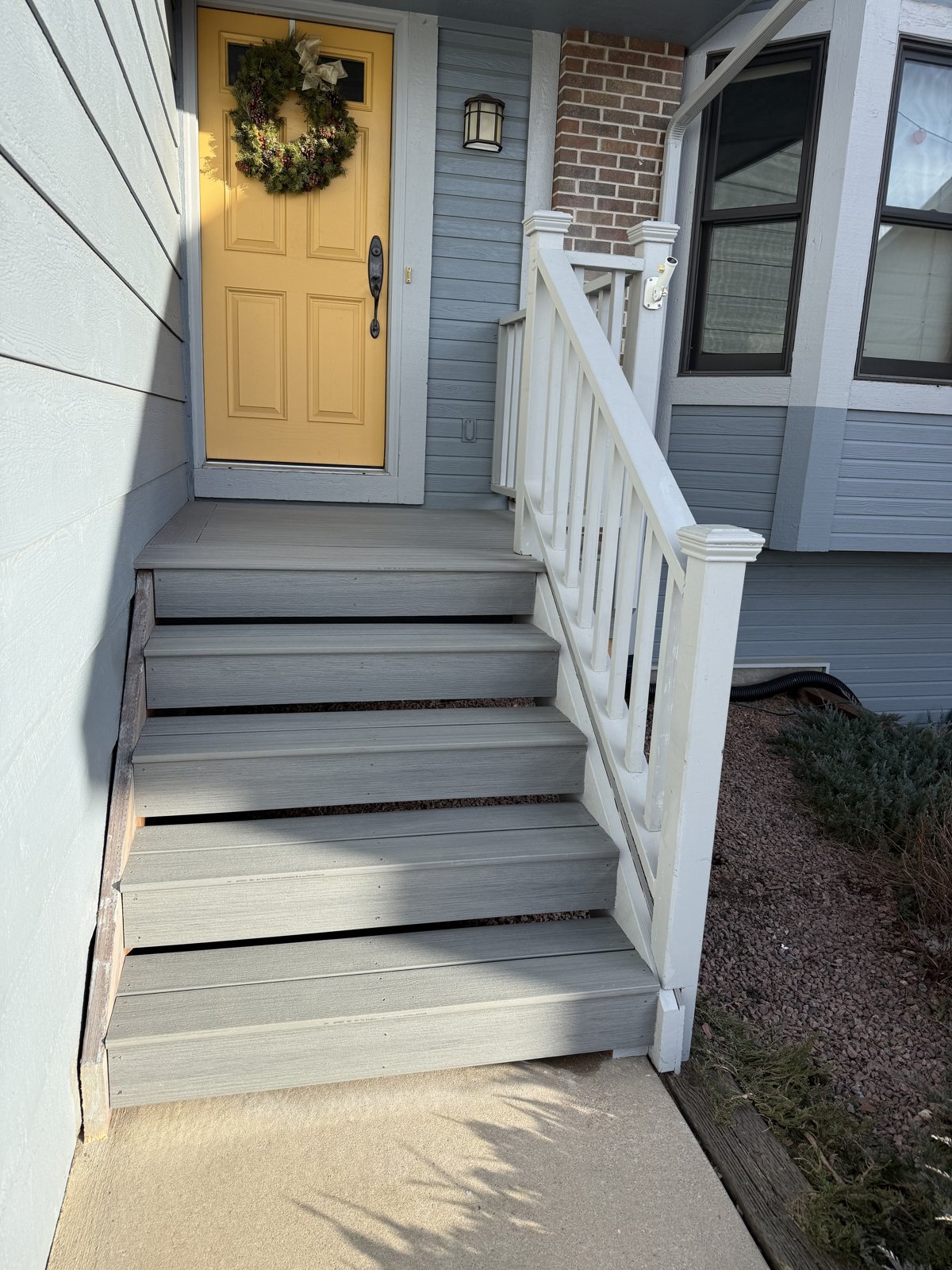
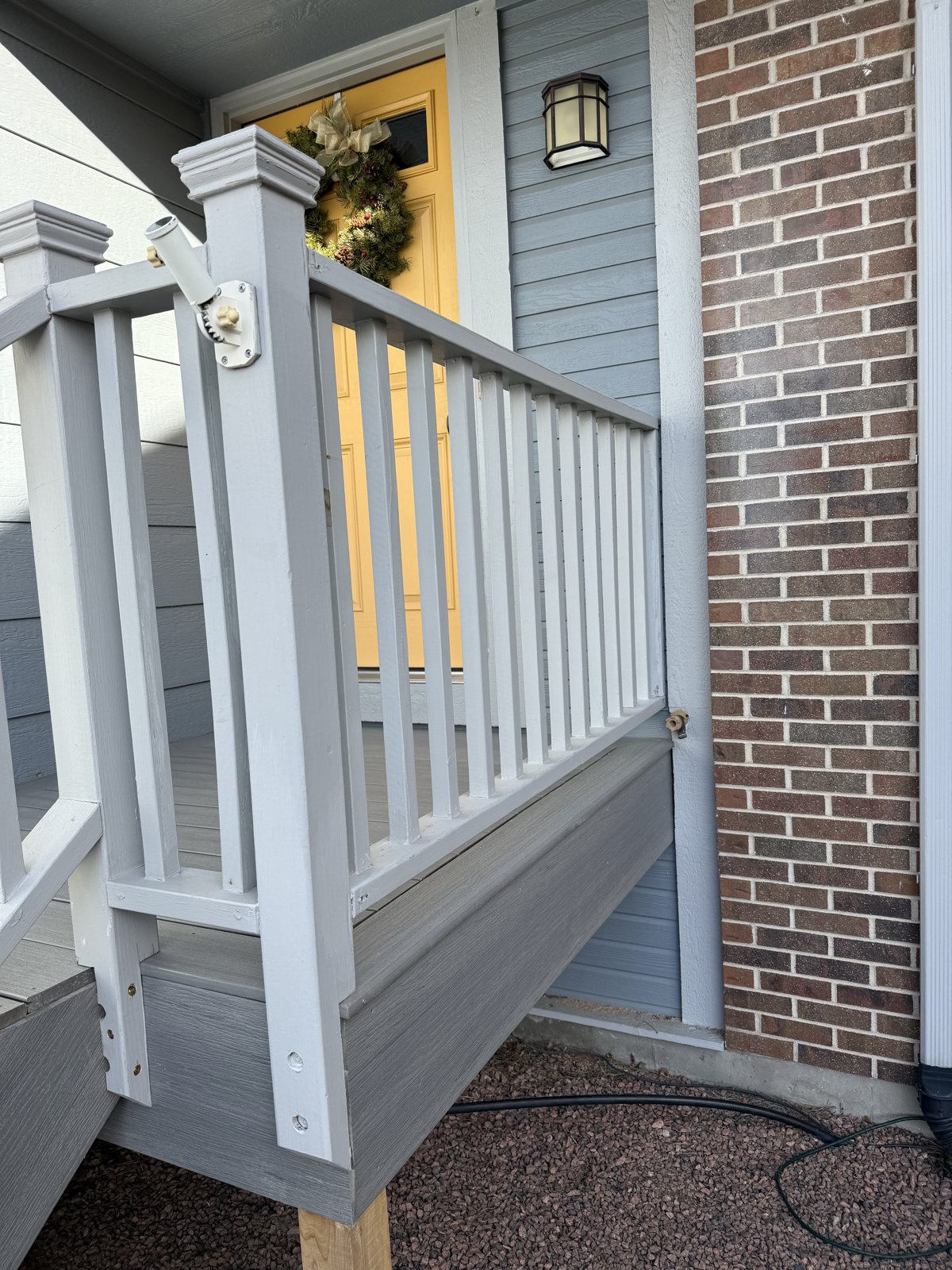
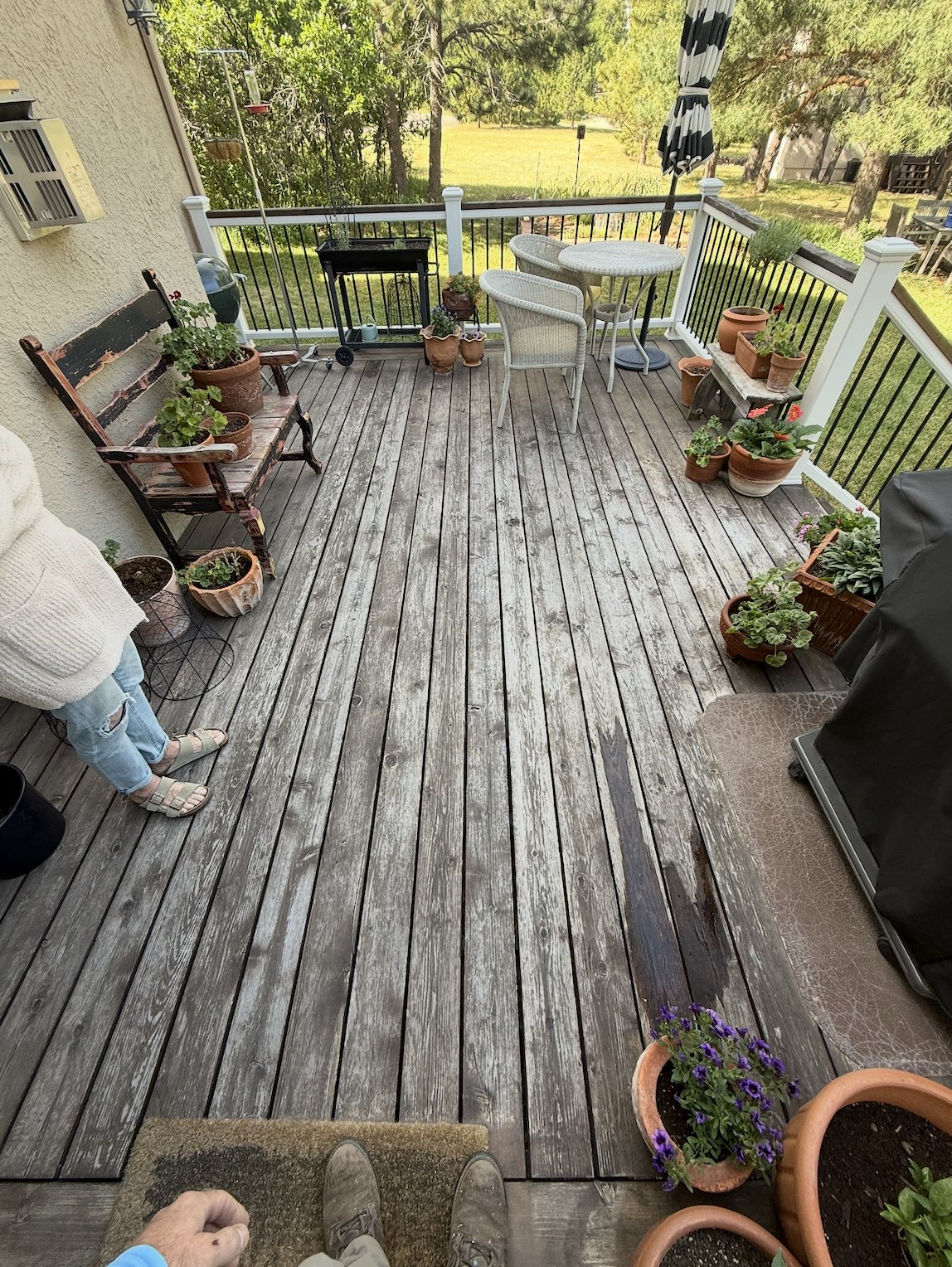
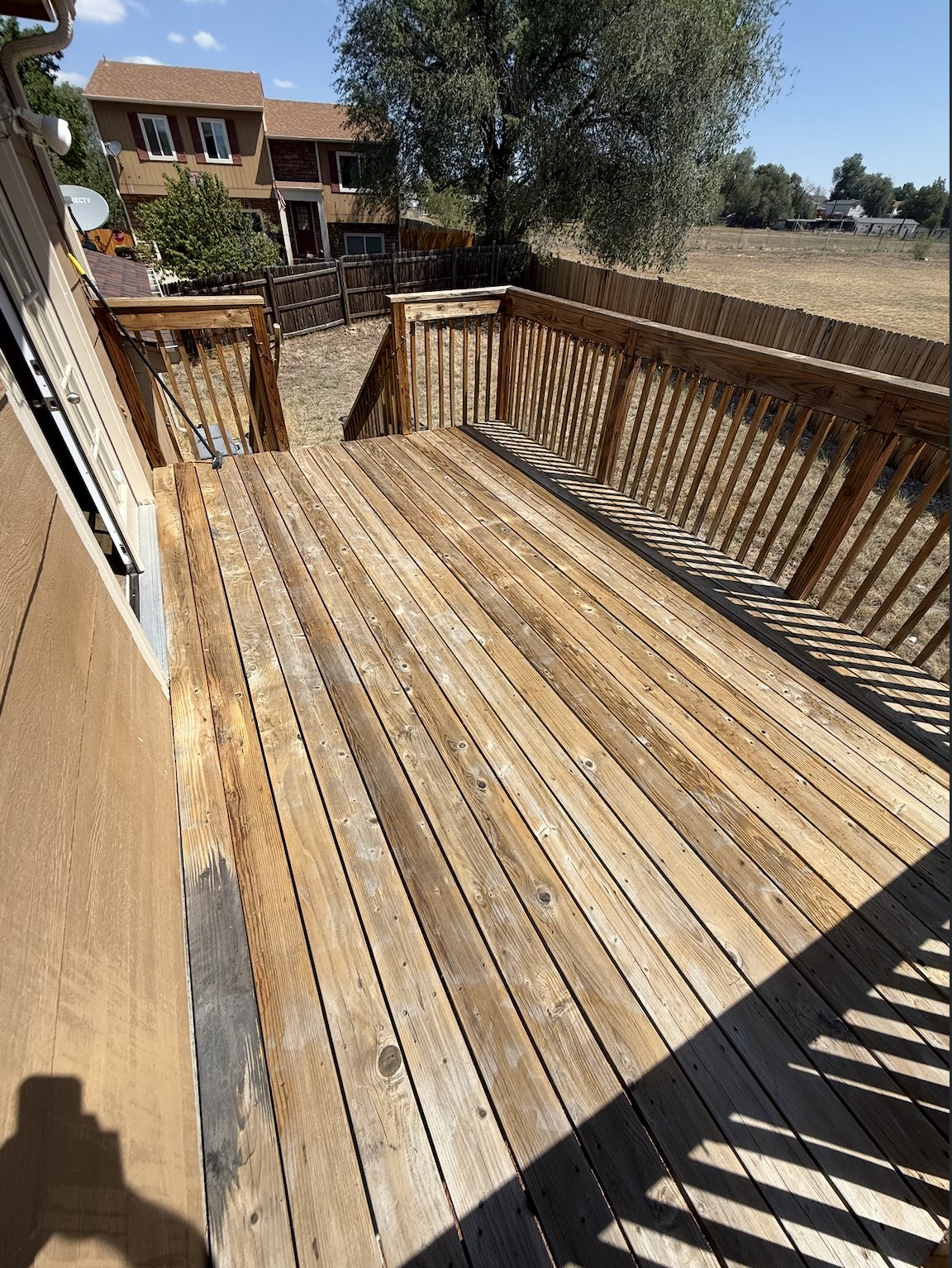
Finished exterior work from our jobs includes a composite front entry deck with new railings, a weathered wood deck taken back to bare wood before stain, and a fence rebuilt on new posts. Here is what that looks like.
Every deck or exterior job follows the same five steps, so you always know what comes next:
Ready to price your deck, siding, or fence? Request a free estimate or call (719) 243-9718.
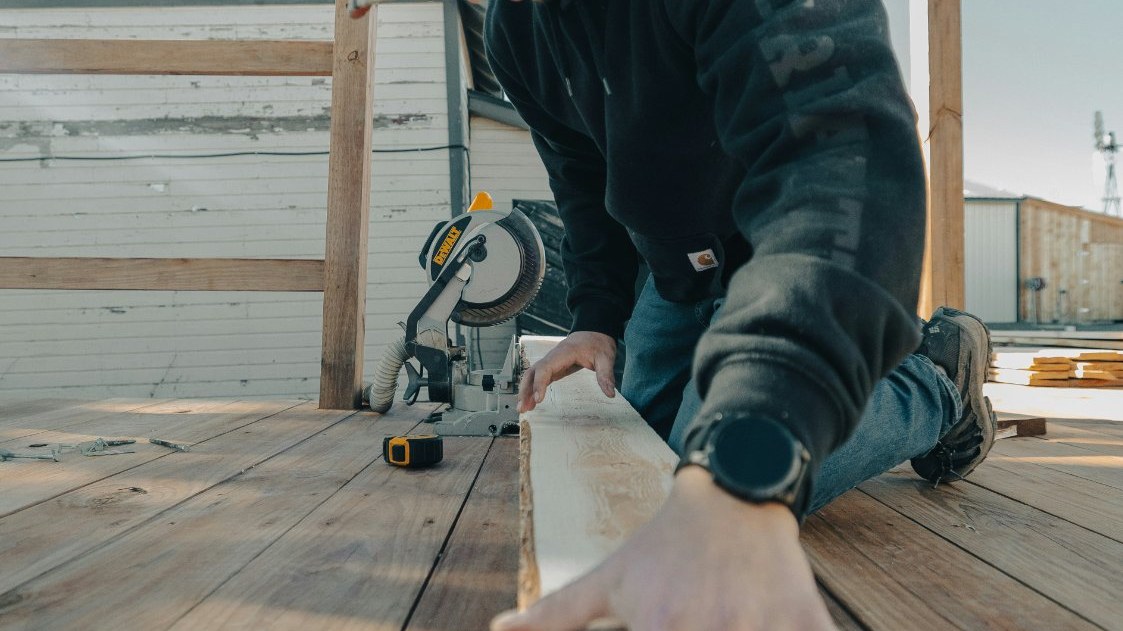
Every project gets a detailed written estimate with flat-rate pricing before work begins. Call (719) 243-9718 or submit the estimate form.